

Views: 358 Author: Site Editor Publish Time: 2026-02-23 Origin: Site


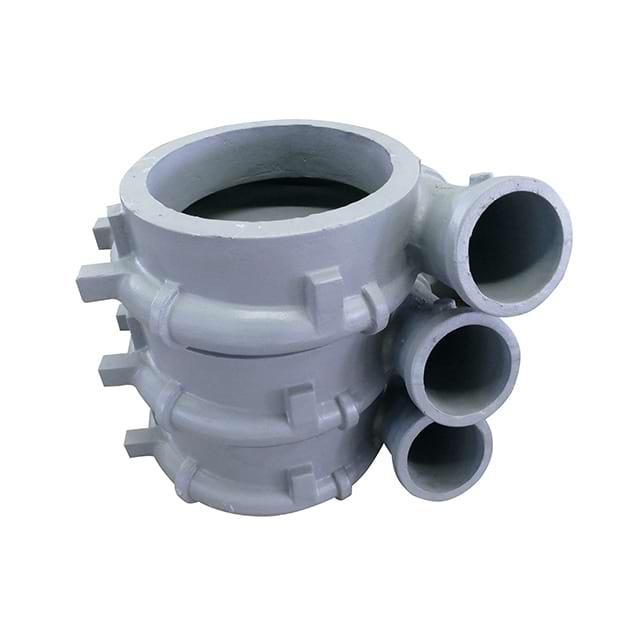
Modern water supply projects face a complex set of conflicting demands. Engineers and municipal planners must balance the requirement for extreme longevity—often targeting lifecycles exceeding 50 years—against strict budget constraints and the physical necessity for high-performance fluid dynamics. When selecting materials for critical infrastructure, the choice often dictates the long-term maintenance burden and operational efficiency of the entire network.
The solution for many non-impact hydraulic components lies in a material that has served the industry for over a century, yet remains unsurpassed in specific engineering criteria. Gray Iron Casting represents the optimal intersection of cost-efficiency, compressive strength, and machinability. It is not merely a traditional choice; it is a technically superior option for applications where rigidity and vibration control are paramount.
This article evaluates the specific benefits of using gray iron—specifically ASTM A48 classes—for water supply equipment such as pumps, valves, hydrants, and fittings. We will assess its performance against modern engineering standards, helping you determine where this material fits into a high-reliability hydraulic system.
Vibration Mastery: Gray iron’s unique flake graphite microstructure provides superior vibration damping (up to 10x better than steel), crucial for extending the lifespan of high-throughput water pumps.
Production Economics: Offers the lowest cost-to-strength ratio among ferrous castings, with superior machinability reducing finishing costs by 20–40%.
Application Sweet Spot: Ideal for static pressure-retaining parts (pump housings, valve bodies, manhole frames) where high tensile strength is secondary to rigidity and compressive strength.
Strategic Sourcing: Success depends on selecting the correct class (e.g., Class 30 vs. Class 40) and partnering with a gray iron casting supplier capable of maintaining consistent metallurgy.
One of the most persistent challenges in designing water supply equipment is managing the physical byproducts of high-velocity flow. Water pumps, particularly large centrifugal units used in municipal stations, generate significant noise, vibration, and harshness (NVH). If left unchecked, this energy transmission leads to premature bearing failure, seal leakage, and noise pollution that can affect residential zones near treatment plants.
The defining characteristic of gray iron is its microstructure. Unlike steel or ductile iron, which contain graphite in nodular or spherical forms, gray iron features graphite in the form of interconnected flakes. These flakes sit within the iron matrix and function as internal cushions. When vibration energy travels through the casting, the graphite flakes disrupt the wave propagation, absorbing the energy and dissipating it as negligible thermal energy.
This damping capacity is not a marginal improvement; it is a fundamental material property. Gray iron can dampen vibration up to ten times more effectively than steel weldments. For hydraulic machinery, this means the housing itself acts as a stabilizer, absorbing the mechanical noise generated by the impeller and motor.
The operational return on investment for choosing gray iron in these applications is measurable. Systems utilizing gray iron housings often require fewer external vibration isolators or expensive dampening pads during installation. More importantly, the stability of the housing extends the service life of internal rotating assemblies.
When the pump casing remains rigid and absorbs vibration, the shaft and impeller maintain better alignment. This reduces stress on bearings and mechanical seals, directly lowering maintenance intervals. This property is particularly vital for Vibration-Damping High-Temp Gray Iron Casting requirements often found in industrial wastewater treatment, where pumps may handle fluids at elevated temperatures while managing heavy dynamic loads.
Decision Criterion: If your equipment requires tight tolerance retention under dynamic load, such as centrifugal pump casings or gearbox housings, gray iron is the superior engineering choice over fabricated steel.
In large-scale water infrastructure, material cost is only one component of the Total Cost of Ownership (TCO). A comprehensive analysis must include the costs of casting, cooling, heat treatment, and significantly, the finishing processes.
Gray iron is renowned for its exceptional machinability, a trait that directly translates to lower production costs. The same graphite flakes that provide vibration damping also serve as built-in chip breakers. During CNC machining, these flakes cause the metal chips to break easily rather than forming long, stringy ribbons that can clog machinery or mar the finish.
Furthermore, the graphite provides a degree of natural lubricity. Data regarding general metallurgy principles indicates that gray iron is significantly less abrasive to cutting tools than steel. This can extend tool life by 200% to 300%, allowing manufacturers to run production lines at faster feed rates with less downtime for tool changes. For a project requiring thousands of valve bodies, this efficiency reduces the per-unit cost by 20% to 40% compared to materials that are harder to machine.
Because of these economic factors, General-Purpose Gray Iron Casting remains the standard for mass-produced items like gate valve bodies and pipe fittings. These components often feature complex geometries that must be produced cheaply and reliably.
A lesser-known technical benefit is "age strengthening." Gray iron castings can actually gain strength—approximately 5% to 10%—and see improved machinability after sitting for 6 to 10 days post-casting. This phenomenon involves the precipitation of nitrides within the matrix. Knowledgeable suppliers utilize this window to optimize inventory management, delivering parts that are fully stabilized and easier to machine, further enhancing the value proposition.
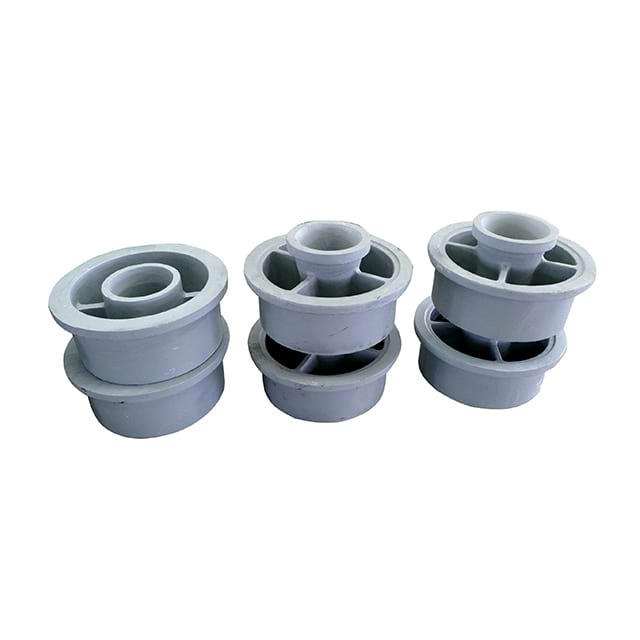
A common misconception is that gray iron is "weak" because its tensile strength is lower than that of ductile iron or steel. However, water supply equipment relies heavily on compressive strength—the ability to withstand being squeezed or loaded—rather than tensile strength (being pulled apart).
While gray iron may have lower tensile limits, its compressive strength is formidable, often comparable to medium-carbon steel. This makes it exceptionally suited for parts that bear heavy static loads or contain internal pressure.
In the context of buried infrastructure, components like valve boxes, manhole frames, and drain grates are subjected to constant soil loads and the weight of overhead traffic. Gray iron withstands this compression without deforming. Unlike ductile materials that might yield or warp under heavy static weight, gray iron remains rigid, maintaining the structural integrity of the access point.
For pressure containment, Rugged High-Precision Gray Iron Castings are utilized effectively in thick-walled vessels. Hydrant bases and large-diameter pipe fittings rely on this rigidity. The material effectively contains hydraulic pressure, provided the wall thickness is engineered correctly.
Rigidity also equals dimensional stability. Gray iron resists deformation under thermal cycling or stress. This ensures that flange faces and sealing surfaces remain perfectly flat over decades of use. In a water system, a warped flange leads to leaks; gray iron’s stiffness ensures that once a seal is made, it holds, preventing water loss and ground contamination.
Water flow components are rarely simple boxes. They require intricate curves, volutes, and internal chambers designed to optimize fluid dynamics and minimize head loss. Gray iron offers superior castability, making these designs possible.
Gray iron has high fluidity at molten temperatures and exhibits low shrinkage rates during solidification. This allows the molten metal to fill complex mold cavities completely, capturing fine details that other metals might miss. It also allows for the production of sound castings with varying wall thicknesses, reducing the risk of defects like cold shuts or porosity.
This fluidity grants engineers immense design freedom. It allows for the creation of intricate internal passageways in hydraulic valves and impeller housings that would be impossible or prohibitively expensive to fabricate via welding.
This is particularly valuable for retrofitting projects. Aging water infrastructure often requires replacement parts that are no longer stock items. The viability of Custom Gray Iron Castings allows municipalities to reverse-engineer and cast specific components that fit existing layouts perfectly.
Modern manufacturing further enhances this capability. Leading gray iron casting services now integrate 3D sand printing for molds. This technology enables the rapid prototyping of complex water flow components without the need for expensive traditional tooling, significantly shortening the lead time for custom infrastructure solutions.
Selecting the right material requires a "features-to-outcomes" evaluation to prevent misapplication. While gray iron is dominant in many areas, it is not a universal solution. Understanding the distinction between gray iron and ductile iron is critical for system safety.
| Feature | Gray Iron | Ductile Iron |
|---|---|---|
| Microstructure | Flake Graphite | Nodular (Spherical) Graphite |
| Vibration Damping | Excellent (High) | Moderate |
| Tensile Strength | Lower (Brittle) | Higher (Yields before break) |
| Impact Resistance | Low | High |
| Cost | Lowest | Moderate to High |
For components that primarily sit still and hold weight or pressure, gray iron is the winner. Examples include pump bases, gearbox housings, manhole frames, and low-to-medium pressure valve bodies. The reasoning is straightforward: gray iron provides better damping and sufficient strength at a significantly lower cost.
If the component faces sudden shock, bending forces, or water hammer (surge events), ductile iron is required. Examples include pipes laid in unstable soil or high-pressure transport lines. Gray iron is brittle and may crack under sudden impact; ductile iron allows for deformation before failure, providing a safety margin.
For applications involving particulate-laden water, such as slurry pumps, engineers often specify Abrasion-Resistant Gray Iron Casting Parts. These are often alloyed to increase hardness. Even standard grades of gray iron offer moderate wear protection for sliding parts, such as gate valve wedges, due to the natural lubricity of the graphite.
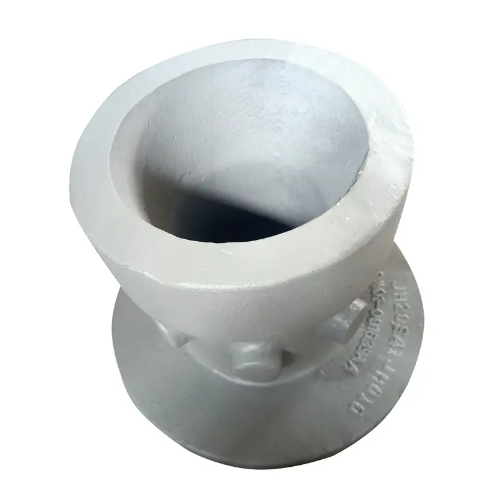
While gray iron is robust, successful implementation requires acknowledging its limitations and enforcing strict quality standards.
The primary risk with gray iron is brittleness. It should not be used in applications where sudden mechanical shock is expected during installation or operation. Dropping a heavy gray iron casting can cause it to crack, whereas steel would dent. Handling procedures must reflect this.
Gray iron is not rust-proof, but it behaves differently than steel. Upon exposure, it forms an insoluble graphitic layer on the surface that can provide some self-protection against further deep corrosion. However, for long-term water submersion, external coatings are standard. Epoxy or bitumen coatings are typically applied to ensure the component outlasts steel, which tends to pit and scale more aggressively.
To ensure reliability, procurement teams must verify that their chosen gray iron casting supplier adheres to recognized standards:
Compliance: The foundry must cast according to ASTM A48 / A48M standards.
Class Selection: Be specific. Specify Class 20 for non-critical covers, but demand Class 30 or Class 40 for pressurized pump and valve components.
Testing: Mandate tensile bar testing and microstructure analysis. It is vital to verify the percent of ferrite versus pearlite to ensure the casting meets the required strength and machinability parameters.
For the water supply equipment sector, Gray Iron remains the industry backbone. This endurance is not due to a lack of innovation, but because its specific physical properties—unrivaled vibration damping, high compressive strength, and excellent castability—are perfectly aligned with the needs of hydraulic infrastructure.
Buyers and engineers should prioritize gray iron for housings, bases, and static valves to maximize budget efficiency and operational quietness. Ductile iron should be reserved for areas subject to high shock or ground movement. By understanding these distinctions, you can build a water system that is both cost-effective and built to last for generations.
We encourage engineers to consult with metallurgical experts to define the exact Class and alloy requirements for their specific water application. Selecting the right grade today prevents costly maintenance tomorrow.
A: No, but it corrodes differently than steel. It requires standard coatings (epoxy, asphalt paint) for long-term water submersion, though it often outlasts steel in underground applications due to wall thickness.
A: The number refers to the minimum tensile strength in thousands of pounds per square inch (ksi). Class 30 is standard for general waterworks; Class 40 is used for higher-pressure pumps requiring greater strength.
A: Generally, no. Due to the flake graphite structure, welding is difficult and requires preheating/specialized techniques. For water equipment, damaged parts are usually replaced rather than repaired via welding.
A: Primarily for its ability to dampen vibration and noise, and its stability, which keeps internal bearings and seals aligned longer than fabricated steel housings.
p>


