

Views: 226 Author: Site Editor Publish Time: 2026-02-19 Origin: Site


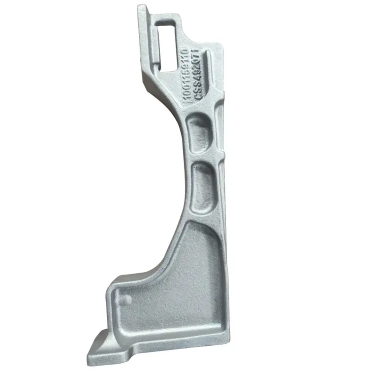
Industrial air compressors are often described as the "fourth utility" in modern manufacturing, ranking alongside electricity, water, and natural gas in importance. When these critical machines fail, the cost of lost production significantly exceeds the price of the replacement components. Consequently, engineers face a high-stakes trade-off during the design phase: choosing between the high tensile strength of steel or the superior damping capacity and machinability of iron.
For static and sliding compressor components, Gray Iron Casting is not merely a cost-saving alternative—it is often the technically superior choice. Its unique microstructure addresses specific challenges regarding vibration, thermal management, and wear that other metals simply cannot resolve. This article explores the metallurgical reasons behind this durability, examines specific applications in compressor technology, compares the return on investment (ROI) against steel and aluminum, and outlines criteria for evaluating suppliers.
Superior Damping: Gray iron offers up to 7x the vibration damping capacity of steel, crucial for reducing NVH (Noise, Vibration, Harshness) in high-speed compressors.
Self-Lubricating Microstructure: Graphite flakes provide natural lubricity, extending the life of abrasion-resistant gray iron casting parts like rotors and cylinder liners.
Dimensional Stability: High compressive strength ensures housing integrity under variable pressure loads (7–10 bar typical).
Cost-Efficiency: Lower casting temperatures and superior machinability reduce total manufacturing costs by 30-50% compared to forged steel.
The operational stability of an industrial compressor relies heavily on the material’s ability to absorb energy. In high-speed reciprocating or rotary screw compressors, unchecked vibration can propagate through the system, damaging sensitive instrumentation and shortening the lifespan of bearings.
The secret to gray iron's performance lies in its microstructure. Unlike ductile iron, where carbon forms spherical nodules, gray iron contains graphite in the form of interconnected flakes. These flakes act as internal stress breakers. When vibrational energy travels through the metal, the graphite flakes interrupt the wave path, dissipating the energy as negligible amounts of heat rather than transmitting it to downstream components.
From a physics perspective, the specific damping capacity of gray iron is significantly higher than its counterparts. If we assign a damping ratio of approximately 1.0 to gray iron, ductile iron typically registers around 0.14, and steel is even lower.
This property has a direct business impact. By utilizing Vibration-Damping High-Temp Gray Iron Casting materials, manufacturers can reduce the need for external isolation mounts and protect the compressor's air-end tolerances. It absorbs resonance before it causes structural fatigue, ensuring that the machine runs quieter and longer.
Rigidity is paramount for heavy machine bases and compressor frames. Any flex in the frame can lead to misalignment between the motor and the compressor pump. Engineers frequently specify Rugged High-Precision Gray Iron Castings for these massive structural components. The material’s high stiffness-to-weight ratio ensures that the alignment remains true even under dynamic loading conditions, preventing catastrophic seal failures.
Durability in compressors is not just about holding a static load; it is about surviving friction and heat. Gray iron excels in tribological (friction and wear) applications due to the very graphite flakes that provide damping.
When a gray iron component is machined, the graphite flakes at the surface are exposed. During operation, these flakes release microscopic amounts of graphite, which acts as a solid lubricant. This "smear" effect provides emergency lubrication during oil-starvation events, such as cold starts or momentary pump failures.
This characteristic is vital for Abrasion-Resistant Gray Iron Casting Parts like screw rotors and vane rotors. While aluminum rotors are lighter, they lack this self-lubricating property and are prone to galling if the oil film breaks. Gray iron rotors maintain tight air-end tolerances longer, resisting the abrasive wear caused by particulate matter in the intake air.
Compressing air generates significant heat. If this heat is not dissipated, it can degrade the lubricating oil and reduce the unit's volumetric efficiency. Gray iron possesses excellent thermal conductivity, effectively drawing heat away from the compression chamber and into the cooling fins or water jacket.
| Property | Gray Iron | Aluminum | Implication for Compressors |
|---|---|---|---|
| Thermal Expansion | Low | High | Gray iron allows for tighter running clearances, improving efficiency. |
| Thermal Conductivity | High | Very High | Both dissipate heat well, but iron handles thermal shock better without warping. |
| Melting Point | ~1200°C | ~660°C | Iron retains structural integrity in extreme overheating events. |
A common critique is that gray iron has lower tensile strength than steel. However, this view ignores the nature of compressor mechanics. Compressor housings and cylinder blocks are primarily subjected to compressive loads—they must contain internal pressure (typically 7–10 bar) without expanding.
In compressive applications, gray iron rivals low-carbon steel, often exceeding 10MPa capability. It delivers the necessary strength to contain pressure without the excessive cost associated with high-tensile materials that are unnecessary for stationary housings.
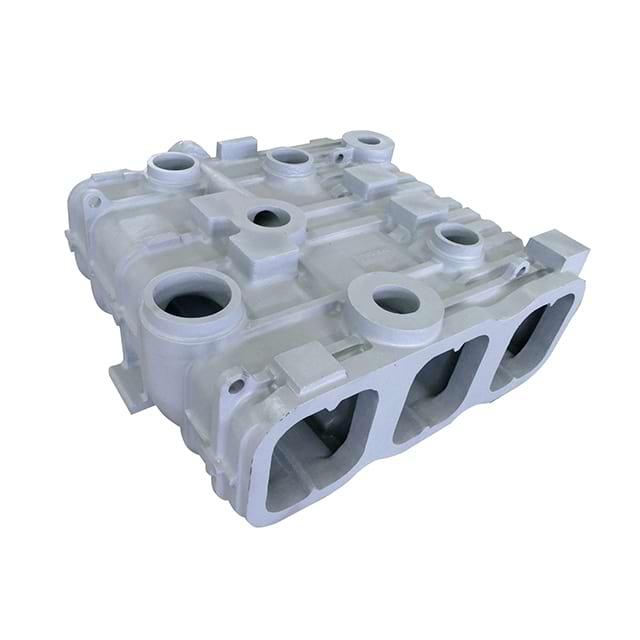
For procurement managers, the value of a material is defined by the Total Cost of Ownership (TCO). While raw material costs fluctuate, the processing costs—casting, machining, and finishing—often drive the final part price.
The graphite flakes in gray iron cause the metal chips to break easily during machining. This "short chip" formation prevents long, stringy swarf that clogs cutting tools and damages surface finishes. Consequently, General-Purpose Gray Iron Casting components can be machined at higher speeds with significantly less tool wear compared to steel.
This is a major ROI driver. For complex geometries like multi-stage pump shells, machining can represent 40% of the production time. Reducing this time lowers the per-unit cost substantially, allowing manufacturers to allocate budget elsewhere.
Gray iron exhibits high fluidity in its molten state. This allows foundries to cast intricate shapes with thin walls that would be impossible or prohibitively expensive with cast steel. Cylinder heads often require complex internal cooling passages (water jackets) to regulate temperature. A competent gray iron casting supplier can achieve these internal features using advanced core assemblies, reducing the need for multi-part assemblies and gaskets that could leak.
While the raw material savings of iron over steel are real, they are secondary. The primary TCO reduction comes from a 30-50% reduction in post-casting processing labor. You get a near-net-shape part that is easier to drill, tap, and face, accelerating time-to-market for new compressor models.
Making the right material choice requires a structured approach. Below is a decision framework to help engineers and buyers align material properties with component functions.
Choose Gray Iron (Classes 25-40) when:
The component is static or bears compressive loads (e.g., Housings, Cylinder Blocks, Bedplates).
Vibration damping is a critical pass/fail metric for the machine's operation.
Intricate internal coring is required for airflow or cooling.
You need Custom Gray Iron Castings that balance cost with high dimensional stability.
Choose Ductile Iron (Nodular) when:
The component faces impact loads or high tensile stress (e.g., Crankshafts, Connecting Rods).
Elongation and flexibility are required to prevent catastrophic failure under shock loading.
Choose Steel/Aluminum when:
Weight reduction is the primary constraint (e.g., mobile or towable compressors).
Extreme tensile strength (>60k psi) is mandatory for safety compliance.
Leading manufacturers often adopt a hybrid approach. They utilize heavy, vibration-absorbing gray iron for the main housing and base to ensure stability, while employing ductile iron for the internal moving parts. This strategy optimizes the machine for both durability and cost.
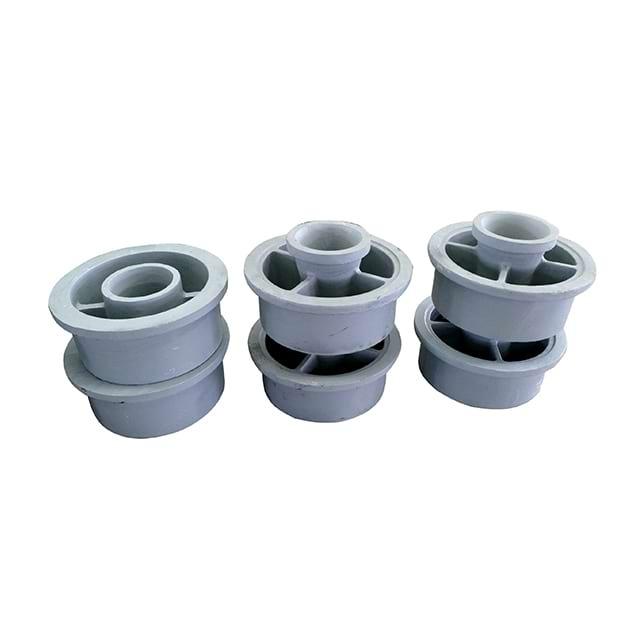
Selecting the right partner is as important as selecting the right metal. Not all foundries are equipped to handle the precision requirements of the compressor industry.
When auditing gray iron casting services, look beyond the price per pound. You must demand metallurgy reports that verify Carbon Equivalent (CE) control. If the CE is too low, the iron becomes "chilled" (too hard), creating hard spots that break machining tools. If it is too high, the casting becomes porous and weak. A reliable supplier controls this chemistry tightly.
Compressor housings are pressure vessels. Therefore, your supplier must have robust leak testing protocols. Ask specifically about their ability to pressure test castings to 1.5x the operating pressure. Furthermore, assess their ability to handle complex core assemblies. If they cannot guarantee the concentricity of internal bores, the casting will fail during final machining.
Finally, evaluate the supplier's scalability. Can they move from prototype to full production without a drop in quality? Ensure they have consistent sourcing for raw materials—specifically, a stable supply of high-quality pig iron and scrap steel—to maintain material consistency batch over batch.
Specifying gray iron for industrial compressors is a strategic engineering decision that prioritizes long-term operational stability over raw tensile strength. For applications where continuous duty, thermal stability, and noise control are paramount, gray iron remains the undisputed industry standard.
It provides the damping necessary to protect sensitive electronics, the wear resistance to extend rotor life, and the machinability to keep manufacturing costs competitive. If your current equipment is suffering from excessive vibration or premature component wear, it may be time to re-evaluate your material specifications. A consultation on high-grade gray iron solutions could be the next logical step toward improving your equipment's reliability.
A: Gray iron is preferred primarily for its superior vibration damping capacity (up to 7x that of steel) and excellent castability. It absorbs the noise and resonance generated by high-speed compression, protecting internal components. Additionally, it is easier to machine and holds complex shapes better than cast steel, making it more cost-effective for static housings.
A: The numbers refer to the minimum tensile strength in thousands of pounds per square inch (ksi). Class 30 has a minimum tensile strength of 30,000 psi, while Class 40 offers 40,000 psi. Class 40 is stronger and harder but can be slightly more difficult to machine. Engineers choose based on the specific pressure and structural loads of the application.
A: Welding gray iron is difficult and generally not recommended for pressure-containing parts like compressor housings. The heat from welding can cause cracking due to the graphite microstructure and lack of ductility. In most industrial cases, replacing the cracked casting is safer and more reliable than attempting a repair.
A: Gray iron handles heat very well. It has high thermal conductivity, allowing it to dissipate heat away from the combustion or compression chamber efficiently. It is also resistant to thermal shock, meaning it can withstand rapid temperature changes without warping, which helps maintain tight internal tolerances.
A: Like all ferrous metals, gray iron will rust if exposed to moisture without protection. However, the graphite on the surface offers some mild protection compared to pure steel. In industrial applications, gray iron castings are almost always painted, powder-coated, or treated with rust inhibitors to prevent corrosion and ensure a long service life.


