

Views: 0 Author: Site Editor Publish Time: 2026-03-06 Origin: Site


Modern machines depend on strong and reliable metal components. From mining equipment to transportation systems, many industries require materials that combine durability, flexibility, and cost efficiency. Carbon Steel Casting has become one of the most widely used manufacturing solutions because it delivers this balance while supporting complex industrial designs. Carbon Steel Casting allows manufacturers to produce strong metal parts by pouring molten carbon–iron alloy into molds. This process makes it possible to create complex shapes and heavy structural components that other production methods may struggle to achieve. As a result, carbon steel castings appear in many critical applications, including machinery frames, pump housings, valves, and transportation equipment.
In this article, we explore the basic knowledge of Carbon Steel Casting, including its definition, main types, production process, mechanical properties, and industrial applications. You will also learn how experienced manufacturers such as Jinhong support industries by providing customized casting and machining solutions for demanding engineering projects.
Carbon Steel Casting describes a process where molten steel flows into a mold cavity and solidifies into a finished component. The alloy mainly contains iron and carbon, plus small amounts of other elements that refine mechanical properties. Carbon content generally stays below two percent. Even such a small variation significantly changes hardness, strength, and flexibility.
Manufacturers rely on casting when they need complex geometries. The molten metal fills the mold completely, capturing every contour and structural detail. After cooling, the part becomes strong and ready for finishing operations such as machining or surface treatment.
Key Element | Role in Carbon Steel |
Iron | Provides structural base of the alloy |
Carbon | Controls hardness and strength |
Manganese | Improves strength and wear resistance |
Silicon | Enhances casting fluidity |
Several factors explain the popularity of Carbon Steel Casting in manufacturing.
First, it provides excellent structural integrity. Carbon steel components can withstand high loads, impact forces, and mechanical stress without losing stability.
Second, it offers reliable mechanical performance. Engineers can predict the behavior of carbon steel under real operating conditions because the material has been studied and used extensively for more than a century.
Third, carbon steel provides an effective balance between cost and performance. Compared with some high-alloy steels, carbon steel remains affordable while still delivering strong mechanical characteristics.
Note: Carbon steel has supported industrial development for decades because its behavior under stress and temperature changes is well understood.
Carbon steel castings offer several important performance advantages:
● High tensile strength for load-bearing applications
● Good impact resistance, allowing parts to absorb sudden stress
● Strong machinability, which simplifies finishing operations
● Reliable weldability for structural assemblies
● Adaptability to heat treatment, enabling engineers to modify mechanical properties
These characteristics make carbon steel casting suitable for industries where strength and reliability are essential.
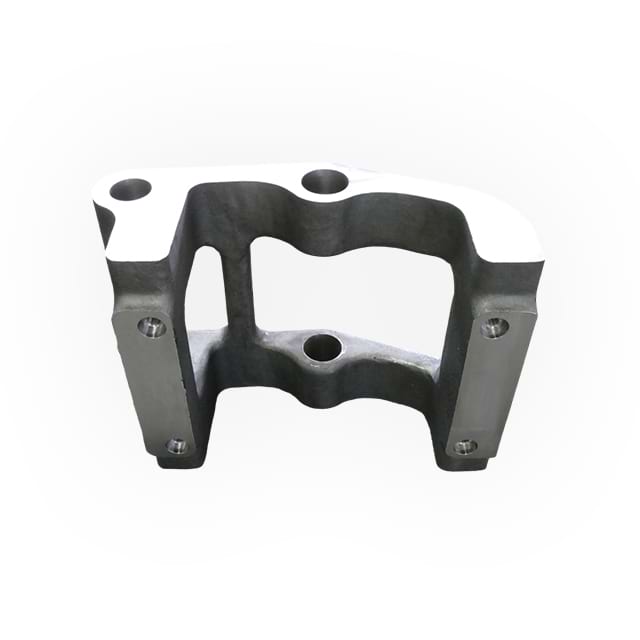
Low carbon steel usually contains up to 0.30% carbon. It offers excellent ductility and is easy to weld and machine.
Because of its flexibility, this material performs well in components that require deformation resistance and structural stability. Common applications include:
● Fasteners and bolts
● Structural brackets
● Shafts and rods
● Construction hardware
These castings are often selected when engineers prioritize workability and toughness.
Medium carbon steel contains approximately 0.30% to 0.60% carbon. It offers a balanced combination of strength and ductility.
Engineers often choose this material for mechanical parts exposed to moderate stress. Typical applications include:
● Gear systems
● Crankshafts
● Machine couplings
● Automotive components
Heat treatment can further enhance strength and wear resistance.
High carbon steel typically contains above 0.60% carbon. This composition increases hardness and wear resistance.
It is commonly used in applications requiring high durability, such as:
● Cutting tools
● Wear-resistant machine parts
● Industrial blades
● Heavy-duty equipment components
Although harder than other carbon steels, it maintains excellent performance under abrasive conditions.
Ultra-high carbon steel contains more than 1.25% carbon. It delivers extremely high hardness and structural durability.
This material appears in specialized engineering applications where strength and wear resistance are critical, including advanced industrial tooling and precision mechanical components.
Carbon Steel Type | Carbon Content | Key Property | Typical Applications |
Low Carbon Steel | Up to 0.30% | High ductility | Fasteners, shafts |
Medium Carbon Steel | 0.30–0.60% | Balanced strength | Gears, crankshafts |
High Carbon Steel | Above 0.60% | Wear resistance | Tools, machinery |
Ultra-High Carbon Steel | Above 1.25% | Extreme hardness | Precision tooling |
Each type of carbon steel offers different mechanical characteristics based on its carbon content. By selecting the appropriate grade, engineers can optimize Carbon Steel Casting components for strength, flexibility, or wear resistance depending on the application.
Understanding the production process helps engineers appreciate why Carbon Steel Casting remains one of the most versatile manufacturing methods.
The casting process begins by choosing the correct steel grade. Engineers evaluate several factors, including:
● Required mechanical strength
● Environmental conditions
● Wear resistance needs
● Component size and shape
Selecting the proper material composition ensures the final product performs reliably throughout its service life.
Next, the selected carbon steel material is heated in a furnace until it becomes molten metal. Modern foundries often use induction furnaces or electric arc furnaces to control temperature precisely.
Once the steel reaches the required temperature, technicians remove impurities and prepare the molten metal for pouring.
After the molten steel is prepared, manufacturers create molds that determine the final shape of the casting. Different molding techniques are used depending on the size, complexity, and precision requirements of the component. Among them, sand casting and investment casting are the two most widely used methods in Carbon Steel Casting production.
Casting Method | Key Characteristics | Typical Advantages |
Sand Casting | Uses sand-based molds to form the casting shape | Ideal for large components, cost-effective production, flexible mold design |
Investment Casting | Uses wax patterns coated with ceramic shells to form molds | Suitable for complex shapes, higher dimensional accuracy, smooth surface finishes |
Once the mold is prepared, molten steel is carefully poured into the mold cavity. The metal fills the internal space and gradually solidifies, forming the desired component shape before moving to cleaning and finishing processes.
As the molten steel cools, it gradually solidifies into the desired shape. After complete solidification, technicians remove the casting from the mold.
Additional operations may include:
● Surface cleaning
● Removing excess material
● Machining and finishing
● Quality inspection
Tip: Controlled cooling during solidification helps prevent internal defects and improves the structural quality of carbon steel castings.
Carbon steel castings exhibit strong tensile strength and load-bearing capability. These properties make them ideal for structural components and heavy machinery parts.
In applications such as mining equipment or construction machinery, parts must withstand continuous mechanical stress. Carbon steel performs reliably in these demanding conditions.
Ductility allows carbon steel components to absorb energy without breaking. Lower carbon grades demonstrate greater flexibility and resistance to sudden impact.
This property is essential for automotive components and transportation equipment, where mechanical shock occurs frequently.
Heat treatment significantly improves carbon steel performance. Engineers apply different methods depending on the desired property.
Heat Treatment | Purpose | Result |
Annealing | Softens steel | Improves machinability |
Quenching | Rapid cooling | Increases hardness |
Tempering | Controlled reheating | Balances strength and toughness |
These processes allow engineers to customize carbon steel components for specific industrial tasks.
Many industries choose Carbon Steel Casting because it combines strength, flexibility, and cost efficiency. These benefits make it suitable for producing durable components used in machinery, transportation equipment, and industrial systems. The main advantages are summarized below.
Advantage | Description | Industrial Value |
Cost-Effective Performance | Strong mechanical performance at a relatively low material cost. | Reduces production costs while maintaining durability. |
Design Flexibility for Complex Components | Casting allows complex shapes and internal structures. | Enables production of intricate or large components. |
Customizable Material Properties | Carbon content and heat treatment can adjust performance. | Helps match materials to different working conditions. |
These advantages explain why Carbon Steel Casting remains widely used for structural and heavy-duty industrial components.
Carbon steel castings are widely used in vehicle manufacturing. Examples include:
● Engine brackets
● Suspension components
● Structural chassis elements
These parts must withstand vibration, load stress, and long operating cycles.
Mining and construction equipment rely heavily on carbon steel cast components. Examples include:
● Crusher frames
● Excavator parts
● Conveyor system components
● Industrial gears
These machines operate under intense mechanical stress and abrasive conditions.
Energy infrastructure also depends on carbon steel castings for reliable performance. Typical components include:
● Pump housings
● Valve bodies
● Pipeline connectors
● Turbine casings
These parts must maintain structural integrity under high pressure and temperature.
Many manufacturing systems require durable structural components made from carbon steel castings. Frames, rollers, and machinery housings provide strength and stability for production equipment.
Manufacturers such as Jinhong supply carbon steel cast components for sectors including mining, metallurgy, transportation, and energy. Their integrated casting and machining services help customers obtain custom-designed industrial parts.
Designers should maintain consistent wall thickness throughout the component. Sudden thickness changes can cause uneven cooling and internal stresses.
Uniform section thickness improves casting quality and reduces the risk of defects.
Rounded corners and smooth transitions help molten metal flow evenly during casting. Sharp edges may create turbulence, which can affect structural integrity.
Well-designed transitions also improve mechanical performance under stress.
Working with experienced foundries is critical for achieving reliable results. Professional casting manufacturers understand material behavior, mold design, and quality control.
Companies such as Jinhong combine casting expertise with machining capabilities. Their experience in producing industrial components helps ensure consistent quality and accurate production for complex projects.
Tip: When choosing a casting supplier, evaluate their production capabilities, quality inspection standards, and experience in similar industries.
Carbon Steel Casting supports modern industry because it blends strength, durability, and cost efficiency. Understanding its material types, casting process, mechanical properties, and typical applications helps engineers choose parts that fit real working conditions across heavy machinery, transportation, construction, and energy systems.
As demand grows for reliable components, carbon steel castings remain a dependable option for complex shapes and tough environments. Jinhong Shukong Machinery Casting Co., Ltd. adds value through precise carbon steel castings, plus integrated casting and machining services that help deliver durable parts, stable quality, and predictable performance.
A: Carbon Steel Casting is a manufacturing process where molten carbon–iron alloy is poured into molds to form strong metal components. It is widely used because it provides excellent strength, durability, and cost efficiency. These qualities make it suitable for industries such as heavy machinery, transportation, and energy equipment.
A: The Carbon Steel Casting process begins by selecting the correct steel grade. The metal is melted in a furnace, poured into a prepared mold, and allowed to cool and solidify. After solidification, the casting is cleaned and often machined to achieve the final shape and required performance.
A: Carbon Steel Casting materials are usually classified by carbon content. Low carbon steel offers good ductility and weldability. Medium carbon steel provides a balance of strength and flexibility. High carbon steel delivers greater hardness and wear resistance for heavy-duty applications.
A: Carbon Steel Casting performs well in demanding environments because it combines high tensile strength, good impact resistance, and reliable structural stability. These properties allow components to withstand heavy loads, mechanical stress, and continuous operation in industrial equipment.
A: Yes, Carbon Steel Casting is generally more cost-effective than many alloy steels. It delivers strong mechanical performance while keeping material and production costs relatively low, which makes it a practical choice for large-scale industrial manufacturing.
A: Many industries rely on Carbon Steel Casting components, including automotive manufacturing, mining machinery, construction equipment, and energy systems. These sectors require durable metal parts such as gears, pump housings, valves, and structural machine components.


