

Views: 0 Author: Site Editor Publish Time: 2025-10-17 Origin: Site


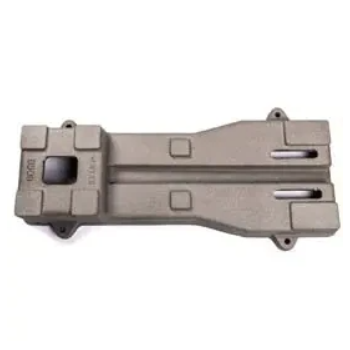
Sand casting, also known as sand molding, is one of the most popular and oldest methods of metal casting used in the manufacturing of metal parts and components. This process involves pouring molten metal into a mold made of sand, which hardens and forms a solid object once cooled. Despite its simplicity, sand casting is highly versatile and cost-effective, making it ideal for a wide range of industries, including automotive, aerospace, and general manufacturing.
In this article, we will dive deep into how sand casting works, its various types, the materials involved, the advantages and disadvantages of the process, and its applications. Whether you're a hobbyist or someone considering this technique for industrial manufacturing, this guide will provide a comprehensive understanding of sand casting.
Sand casting is a metalworking process in which molten metal is poured into a cavity (mold) made from sand, which then solidifies to form a casting. The mold is created by shaping sand around a pattern, which is typically made of a material like wax, metal, or plastic. Once the sand mold is created and the pattern is removed, molten metal is poured into the mold cavity, and once the metal cools and solidifies, the sand mold is broken away to reveal the final metal casting.
Pattern: A model of the object that will be cast, made from materials like wax, metal, or plastic.
Mold: The cavity formed by the sand that shapes the molten metal.
Core: A part of the mold that creates hollow spaces or internal features within the casting.
Binder: A material that holds the sand particles together to maintain the shape of the mold.
Molten Metal: The liquid metal that is poured into the mold to create the desired object.
The sand casting process consists of several steps, each of which is crucial to the successful production of a metal casting. These steps include preparing the pattern, creating the mold, pouring the molten metal, cooling, and finishing the casting.
The first step in sand casting is to create a pattern of the object to be cast. This pattern is typically made of a material that can be easily shaped and removed, such as wax, metal, or plastic. The pattern is an exact replica of the finished product, with any allowances made for factors such as shrinkage during cooling.
Once the pattern is prepared, it is used to create a mold. The mold is made by packing sand around the pattern, often in a two-part mold. The sand is mixed with a binder (such as clay or resin) to help it retain its shape and create a strong mold. The pattern is then carefully removed from the mold, leaving a hollow cavity that will shape the molten metal.
Green Sand Molds: These molds are made using a mixture of sand, clay, and water. Green sand molds are typically used for small to medium-sized castings.
Dry Sand Molds: These molds are made from sand that is mixed with a binding agent and then baked to dry it out. Dry sand molds offer better strength and are used for larger and more complex castings.
Shell Molds: In this technique, a pattern is coated with a ceramic shell to create a mold, often used for precision castings like jewelry or aerospace components.
In many cases, sand castings require hollow spaces or internal features, such as channels or cavities. These are created using cores, which are made from a similar sand mixture as the mold but are placed inside the mold cavity. The core is made separately and inserted into the mold before pouring the molten metal.
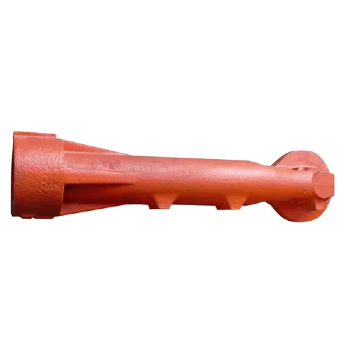
Once the mold and core are ready, the molten metal is prepared. The metal is heated in a furnace until it reaches its liquid state and is then carefully poured into the mold cavity. The molten metal fills the mold and surrounds the core (if present), taking the shape of the cavity. The pouring process requires precision, as the temperature of the molten metal and the speed of pouring must be carefully controlled to avoid defects in the casting.
After the metal is poured into the mold, it begins to cool and solidify. The cooling process may take some time, depending on the size and complexity of the casting. The metal shrinks as it cools, and this shrinkage must be accounted for when designing the pattern. Once the casting has fully solidified, it is removed from the mold.
After the metal has cooled and solidified, the sand mold is broken apart to release the casting. This process often involves vibrating or knocking the mold to separate the sand from the metal. After the mold is removed, the casting is cleaned to remove any remaining sand and mold material. This can be done through sandblasting or washing.
The final step is finishing the casting. This may involve removing excess metal (known as "flash") and smoothing out any rough surfaces. The casting may also be machined to meet the desired specifications. After finishing, the casting is inspected to ensure it meets the required quality standards.
Sand casting is a popular method because of its many advantages. Some of the key benefits include:
Sand casting is relatively inexpensive, especially when compared to more advanced casting techniques like investment casting. The materials needed for the mold (sand and binder) are affordable, and the molds themselves can be reused multiple times. This makes sand casting an excellent option for both small and large production runs.
Sand casting can be used for a wide range of metals, including aluminum, iron, steel, and copper alloys. It is also versatile in terms of part size and complexity, allowing manufacturers to produce anything from small precision components to large industrial parts.
Unlike injection molding or die-casting, sand casting doesn’t require expensive tooling. This makes it an ideal choice for companies that need to produce smaller quantities of custom parts.
Sand casting is capable of producing large, heavy components that may be difficult or impossible to make using other methods. The molds can be made in a variety of sizes, making sand casting suitable for parts ranging from a few inches to several feet in size.
Sand casting allows for the creation of intricate and complex geometries, which is especially useful for producing components with internal features like passages, chambers, or cores. The mold can be tailored to accommodate complex designs and unique shapes.
Unlike other casting techniques, sand casting can be used with nearly any metal, making it an excellent option for diverse applications. The ability to cast in a variety of materials provides manufacturers with more flexibility in their production processes.
Despite its many advantages, sand casting also has some drawbacks that manufacturers should consider before choosing this process:
The surface finish of sand-cast parts is often rough compared to other casting methods. Although post-processing techniques like grinding and polishing can improve the surface quality, it may require additional time and costs.
Sand casting typically has looser dimensional tolerances than methods like die-casting or investment casting. This means that parts may require additional machining to meet precise specifications.
The sand casting process can be labor-intensive, especially when creating molds and cores manually. Although automation is available, manual processes can drive up labor costs, particularly for low-volume production.
While sand casting is excellent for prototyping and small to medium runs, it may not be the most efficient choice for high-volume production, where other methods like die-casting or injection molding may be more suitable.
Sand casting is widely used across various industries, including:
Automotive: Engine blocks, transmission housings, and other critical automotive components.
Aerospace: Aircraft parts such as turbine blades, landing gear, and structural components.
Industrial Equipment: Parts for heavy machinery, pumps, and valves.
Consumer Products: Castings for kitchen appliances, faucets, and home improvement products.
Art and Sculpture: Artistic sculptures and statues, especially for bronze and aluminum casting.
Sand casting remains one of the most widely used and cost-effective methods for producing metal parts and components. With its versatility, low tooling costs, and ability to handle complex designs, sand casting continues to be an essential process in various industries. While it may have some limitations, such as surface finish and dimensional accuracy, these can be overcome with proper design and finishing techniques. Whether you're looking to produce small parts or large, heavy components, sand casting is a reliable and efficient method to consider for your next project.


