

Views: 0 Author: Site Editor Publish Time: 2026-03-04 Origin: Site


Modern industries rely on materials able to withstand pressure, impact, and long operating cycles. But what makes heavy machinery and infrastructure components remain reliable for decades? Carbon Steel Casting offers one of the most practical answers. It forms strong, durable metal parts used widely in transportation systems, construction equipment, energy facilities, and large industrial machines.
In simple terms, carbon steel casting involves pouring molten steel into molds to create complex shapes. After cooling and processing, these components gain impressive strength, structural stability, and design flexibility. Because it balances mechanical performance and cost efficiency, manufacturers across many sectors continue choosing carbon steel casting for high-load applications. In this article, we explore why Carbon Steel Casting remains essential in modern industry. You will learn about its durability, key material properties, and the major industrial sectors that depend on it.
Durability is often the deciding factor when selecting materials for industrial equipment. Components must survive heavy loads, harsh environments, and continuous operation. Carbon steel castings meet these demands exceptionally well.
Many industries rely on machines designed to carry or move massive loads. Excavators, cranes, industrial presses, and railway equipment all require structural components capable of supporting significant weight.
Carbon steel castings offer excellent tensile strength and structural integrity. Engineers often choose them for:
● Gear housings
● Structural brackets
● Load-bearing frames
● Industrial couplings
Because the casting process allows thick sections and reinforced shapes, these components can distribute stress evenly. This reduces failure risk in high-pressure environments.
Industrial machines rarely operate in clean environments. Instead, they work in areas filled with dust, vibration, friction, and temperature fluctuations.
Carbon steel casting performs well under these conditions because it resists wear and fatigue. In mining or construction equipment, parts like crusher components or excavator arms experience constant abrasion. Carbon steel castings maintain strength and performance even under such demanding conditions.
Durable components often last for many years. Carbon steel castings offer excellent fatigue resistance, which allows them to survive repeated stress cycles. Long service life benefits industrial operators because it reduces downtime and maintenance expenses.
A simplified comparison illustrates how durability affects equipment operation:
Factor | Durable Cast Components | Short-Life Components |
Replacement frequency | Rare replacement cycles | Frequent part changes |
Maintenance downtime | Lower operational interruptions | Higher downtime risk |
Long-term cost | Lower lifecycle cost | Higher maintenance expenses |
Durable materials help equipment maintain consistent performance over long operating periods.
Industrial systems must operate safely. Structural failure in transportation equipment or heavy machinery can create serious risks.
Carbon steel castings support safety by maintaining stability under stress. Whether used in bridge structures or railway equipment, durable components help ensure consistent performance.
Note: When selecting structural materials, engineers often prioritize durability over weight savings. Reliable components reduce operational risks and long-term repair costs.
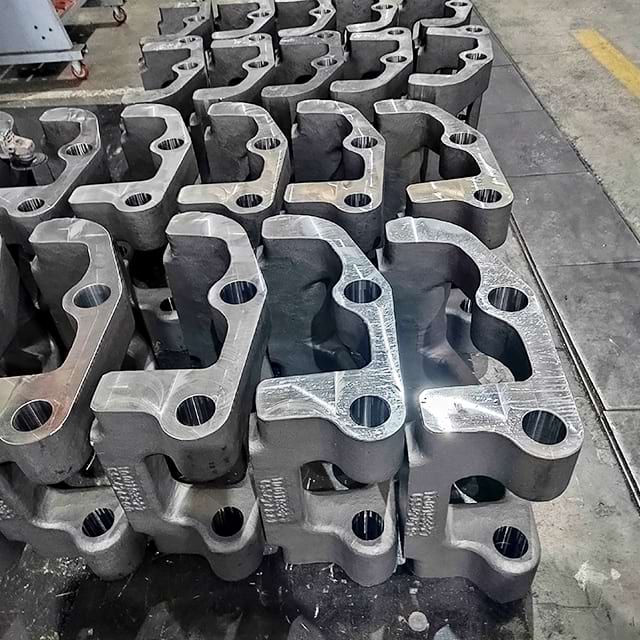
The performance of carbon steel castings begins with their composition and mechanical characteristics. These properties make them adaptable across multiple industries.
Carbon steel consists primarily of iron and carbon, with smaller amounts of elements such as manganese or silicon. The carbon content typically ranges from about 0.05% to 2%.
This composition plays a major role in determining mechanical behavior:
Carbon Level | Key Properties | Typical Applications |
Low Carbon | Higher ductility, easier welding | Structural parts |
Medium Carbon | Balanced strength and hardness | Machinery components |
High Carbon | Increased hardness and wear resistance | Industrial tools |
Adjusting carbon content allows engineers to tailor castings for specific performance needs.
Carbon steel castings provide high tensile strength and excellent impact resistance. These properties allow them to absorb sudden forces without cracking.
Many industrial systems depend on this capability. For example:
● Railway components endure repeated mechanical shock.
● Mining equipment faces constant vibration and heavy impacts.
● Construction machinery handles unpredictable loads.
Strong mechanical behavior ensures that cast parts continue functioning even in dynamic environments.
Another advantage of carbon steel casting is ease of machining. After the casting process, components can be refined through machining operations such as drilling, milling, and surface finishing.
This flexibility allows manufacturers to produce precise components with complex shapes. It also simplifies repair and modification, since carbon steel is generally easy to weld.
As a result, industries benefit from both design flexibility and efficient manufacturing.
Heat treatment plays a critical role in improving the mechanical properties of carbon steel castings. By controlling temperature and cooling rates, manufacturers can modify the internal structure of the metal.
Annealing involves heating the casting to a specific temperature and allowing it to cool slowly. This process reduces internal stresses and improves ductility.
Normalizing follows a similar approach but cools the metal in air. It produces a more uniform grain structure and increases strength.
These treatments help ensure consistent performance in structural applications.
Quenching rapidly cools heated steel, often using water or oil. This increases hardness but may make the metal brittle.
Tempering follows the quenching process. It reheats the material at a lower temperature to restore toughness while maintaining strength.
Together, these treatments create an ideal balance between hardness and durability for demanding industrial components.
Modern foundries combine traditional casting techniques with advanced technologies. Quality control methods such as non-destructive testing and precision machining help ensure consistent results.
Manufacturers like Jinhong apply strict production standards and advanced casting equipment to produce reliable steel castings for industries including mining, transportation, and energy systems.
Tip: When evaluating suppliers, check whether they provide both casting and machining services. Integrated production improves accuracy and reduces delivery time.
Because of its strength and adaptability, carbon steel casting serves a wide range of industries.
Infrastructure projects rely heavily on durable metal components. Carbon steel castings appear in:
● Bridge supports
● Structural connectors
● Crane components
● Load-bearing nodes
These parts must withstand continuous stress while supporting massive structures.
Transportation systems require strong yet machinable materials. Carbon steel castings are widely used in:
● Axle housings
● Transmission components
● Gear systems
● Suspension structures
These parts experience constant motion and mechanical stress, making durability essential.
Energy systems require materials capable of resisting pressure and temperature fluctuations. Carbon steel castings play an important role in power generation equipment and pipeline infrastructure.
Common applications include:
Industry | Example Components | Operational Requirement |
Oil & Gas | Valve bodies and pipeline fittings | High pressure resistance |
Power Generation | Turbine housings and pump casings | Heat and vibration resistance |
Renewable Energy | Gearbox housings in turbines | Mechanical durability |
These components ensure safe and efficient energy production.
Mining and industrial equipment operate under extreme conditions. Carbon steel castings are frequently used for:
● Crusher components
● Excavator parts
● Industrial gears
● Equipment frames
Strong materials help these machines operate continuously without structural failure.
Beyond strength, carbon steel casting offers significant design advantages.
Casting allows manufacturers to create intricate shapes that would be difficult to machine from solid metal. Mold designs enable complex internal channels, reinforced structures, and curved geometries.
This capability is especially valuable in industries that require custom machinery or specialized components.
Carbon steel casting supports a wide range of production sizes. Foundries can manufacture small mechanical components weighing only a few kilograms. They can also produce massive castings used in industrial equipment.
A simple comparison highlights this flexibility:
Casting Size | Typical Weight Range | Industrial Use |
Small castings | 1–20 kg | Automotive components |
Medium castings | 20–500 kg | Machinery parts |
Large castings | 500 kg or more | Infrastructure and mining equipment |
This scalability allows the same material system to serve many industrial sectors.
Performance matters, but cost efficiency remains a key factor in industrial material selection.
Carbon steel offers excellent mechanical properties at a relatively affordable cost compared with stainless steel or specialized alloys.
This balance makes it an attractive option for manufacturers producing high volumes of industrial components.
Casting methods minimize material waste. Molten metal fills the mold precisely, reducing the amount of excess material that must be removed during machining.
The result is efficient production and reduced raw material consumption.
Durability contributes to long-term savings. Components that last longer reduce the frequency of replacement and repair.
In large industrial operations, this translates into lower maintenance budgets and fewer production interruptions.
Some industries require specialized components designed for specific operating conditions. Manufacturers such as Jinhong provide customized casting solutions that combine material selection, casting design, and machining services to meet these requirements.
Note: Custom casting designs often improve performance while reducing assembly complexity, especially in heavy machinery systems.
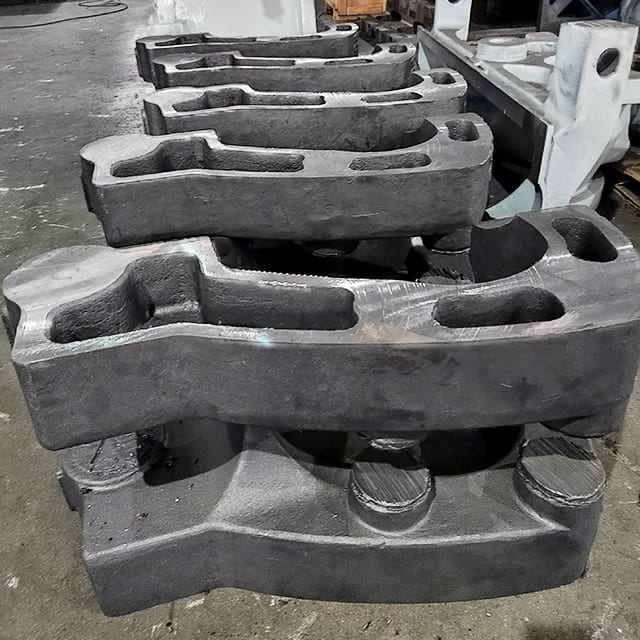
Selecting the correct carbon steel casting requires careful evaluation of several factors.
Different carbon levels provide different mechanical properties. Engineers must choose the appropriate grade based on strength, hardness, and ductility requirements.
For example:
● Low carbon steel works well for welded structural parts.
● Medium carbon steel balances toughness and strength for machinery.
● Higher carbon grades provide increased hardness.
Environmental conditions also influence material selection. Engineers must consider:
● Temperature exposure
● Mechanical load cycles
● Corrosive environments
● Wear conditions
Proper evaluation ensures that the casting performs reliably throughout its service life.
Selecting an experienced manufacturer can significantly improve product performance. Specialized foundries understand casting design, material selection, and finishing processes.
Working with established producers helps ensure consistent quality and reliable supply.
Carbon Steel Casting remains essential in modern industry because it combines strength, durability, and cost efficiency. It supports infrastructure projects, transportation systems, heavy machinery, and energy equipment, helping industrial operations run reliably and safely.
Experienced manufacturers such as Jinhong Shukong Machinery Casting Co., Ltd. enhance this value by delivering precision casting and machining services. Their products provide strong structural performance, long service life, and dependable solutions for demanding industrial applications.
A: Carbon Steel Casting is a manufacturing process where molten carbon steel is poured into molds to create durable metal components. It is widely used because it provides strong mechanical properties, good machinability, and reliable structural performance for heavy industrial equipment.
A: Carbon Steel Casting offers excellent tensile strength and resistance to mechanical stress. These properties allow components to handle heavy loads, repeated impact, and long operating cycles, making them suitable for infrastructure, machinery, and transportation systems.
A: Carbon Steel Casting is commonly used in construction equipment, automotive systems, mining machinery, railway components, and energy infrastructure such as pipelines, pumps, and turbine housings.
A: Heat treatment methods such as annealing, normalizing, quenching, and tempering refine the internal structure of the steel. These processes enhance hardness, toughness, and durability, allowing cast components to perform better in demanding industrial environments.
A: Yes. Carbon Steel Casting offers strong mechanical performance while remaining more affordable than many alloy steels or stainless materials. It also reduces manufacturing waste and maintenance costs due to its long service life.
A: Reliable manufacturers control material composition, casting processes, and heat treatment procedures. Many also conduct inspections such as dimensional checks and non-destructive testing to ensure each casting meets industrial standards.


