

Views: 0 Author: Site Editor Publish Time: 2026-03-13 Origin: Site


What keeps heavy industrial equipment running day after day? Pumps move fluids, valves control pressure, and mining machines handle massive loads. These systems work in harsh environments where heat, abrasion, and pressure are constant challenges. Because of this, manufacturers must choose materials able to deliver long-term durability and stable performance.
This is where Carbon Steel Casting becomes important. It offers high strength, strong wear resistance, and reliable structural stability. Engineers often use it to produce pump housings, valve bodies, and mining equipment parts. It also supports complex shapes while keeping production costs reasonable.
As industries demand stronger machines, the need for dependable cast components continues growing. Experienced manufacturers like Jinhong, known for integrating casting and machining expertise, supply high-quality components for global industrial markets. In this article, we explore the benefits of Carbon Steel Casting for pump, valve, and mining parts, along with the properties and design advantages that make it a trusted industrial solution.
Carbon steel casting delivers several advantages that directly support the performance of industrial equipment. These benefits explain why it remains the preferred choice for heavy-duty components.
One of the most important advantages of carbon steel casting is its high tensile strength. Industrial components often experience heavy loads, vibration, and continuous operation. Carbon steel maintains structural stability even under these demanding conditions.
For example, pump housings and valve bodies must contain high internal pressures without deformation. Carbon steel castings provide the strength needed to maintain dimensional accuracy and prevent structural failure.
In mining equipment, structural integrity is even more critical. Machines such as crushers, excavators, and conveyors operate under intense mechanical stress. Carbon steel casting ensures the core components remain stable during long periods of heavy use.
Mining equipment operates in extremely abrasive environments. Machines process rocks, minerals, and slurry every day. These materials constantly strike and erode metal surfaces. Carbon steel castings resist these harsh conditions. Their hardness and toughness allow them to absorb shock loads and resist wear over time. This makes them suitable for mining parts such as crusher frames, conveyor components, and excavator structures.
Below is a simple comparison showing how carbon steel performs in abrasive conditions.
Property | Carbon Steel Casting | Typical Cast Iron |
Impact Resistance | High | Moderate |
Wear Resistance | High | Moderate |
Structural Toughness | Excellent | Lower |
Heavy Load Capacity | Strong | Moderate |
Because of these properties, carbon steel components remain reliable even in aggressive mining operations.
Industrial equipment must operate for long periods with minimal maintenance. Carbon steel castings perform well in environments that involve:
● Continuous vibration
● Heavy mechanical loads
● Temperature fluctuations
● Outdoor exposure
These conditions are common in mining and industrial plants. Because carbon steel offers strong fatigue resistance, parts can withstand repeated stress cycles without cracking.
The result is longer equipment lifespan and lower maintenance costs.
Another reason manufacturers choose carbon steel casting is cost efficiency. Compared with highly alloyed steels or specialty metals, carbon steel offers a strong balance between performance and affordability.
Additional cost advantages include:
● Reduced machining due to near-net-shape casting
● Lower raw material costs
● Efficient large-scale production
These benefits make carbon steel casting particularly attractive for large industrial equipment where material and manufacturing costs significantly affect project budgets.
Note: When selecting casting materials for heavy equipment, always evaluate the balance between strength, durability, and manufacturing cost rather than focusing on material price alone.
The performance of carbon steel casting comes from its excellent mechanical properties. These characteristics make it suitable for demanding industrial applications.
Carbon steel castings can reach high tensile strength levels, allowing them to support significant loads. This strength is essential for parts used in pumps, valves, and mining machinery where components must withstand mechanical forces without deformation.
Examples include:
● Pump casings
● Turbine housings
● Structural frames in mining equipment
Strong tensile properties ensure these components maintain stability during operation.
In industrial equipment, materials experience repeated loading cycles. Over time, weaker materials may develop cracks due to fatigue.
Carbon steel casting offers strong impact toughness and fatigue resistance, allowing parts to absorb shocks and maintain performance over extended periods. This property is especially valuable in mining machinery where heavy impacts are common.
Another advantage of carbon steel casting is its ability to be heat treated. Heat treatment processes such as quenching and tempering can improve strength, hardness, and wear resistance.
Manufacturers can adjust mechanical properties depending on the application. For instance:
Heat Treatment Process | Resulting Property Improvement |
Normalizing | Improves strength and uniform grain structure |
Quenching and tempering | Enhances hardness and toughness |
Annealing | Improves machinability and reduces internal stress |
This flexibility allows engineers to tailor carbon steel castings to meet specific performance requirements.
Carbon steel also offers good machinability and weldability. These properties simplify finishing operations after casting and allow easier assembly during equipment manufacturing.
For example, if a pump casing requires additional mounting features, machining processes can easily modify the casting. Welding also allows repairs or structural modifications when necessary.
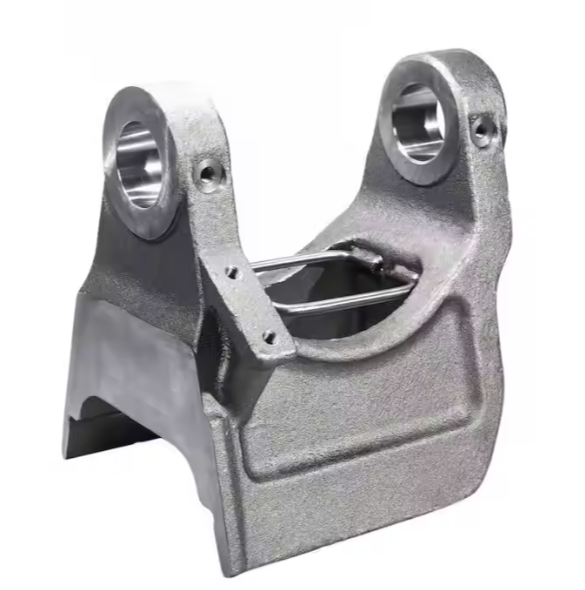
Casting processes allow manufacturers to create intricate shapes that would be difficult or expensive to produce using machining alone.
Examples include:
● Valve bodies with internal flow channels
● Pump impellers with curved blades
● Reinforced housings with integrated mounting points
Producing these shapes directly during casting reduces assembly steps and improves structural strength.
Carbon steel casting enables near-net shape production, meaning the part is produced very close to its final form.
This offers several advantages:
● Less machining required
● Lower material waste
● Shorter production time
Manufacturers benefit from improved efficiency while maintaining high product quality.
Fluid control systems rely on precise internal surfaces. Valves and pumps require accurate flow paths and sealing surfaces.
Carbon steel casting allows manufacturers to produce these features directly in the casting process. Internal cavities, channels, and complex surfaces can be formed without extensive machining.
Tip: When designing pump or valve components, collaborate early with the casting supplier. Early design adjustments can reduce machining costs and improve casting quality.
Investment casting can achieve very tight tolerances. The process produces smooth surfaces and highly accurate shapes.
For pump and valve components, this accuracy helps ensure:
● Better sealing performance
● Reduced leakage risk
● Improved assembly compatibility
These advantages are critical in high-pressure fluid systems.
Because investment casting produces near-final shapes, manufacturers often require minimal post-processing. Many internal surfaces and features can remain in their as-cast condition.
This reduces:
● Production time
● Machining costs
● Material waste
Investment casting also enables the production of thin walls and detailed structures.
Examples include:
● Precision impeller blades
● Valve bodies with internal channels
● Pump housings with reinforced ribs
These detailed features help optimize fluid flow while maintaining structural strength.
Industry Sector | Typical Carbon Steel Cast Components | Key Performance Need |
Pump Systems | Casings · Impellers · Housing Covers | Pressure resistance · Structural strength |
Valve Systems | Valve Bodies · Flanges · Bonnet Housings | Sealing stability · Pressure control |
Mining Equipment | Crusher Parts · Machine Housings · Frames | Wear resistance · Impact toughness |
Heavy & Energy Machinery | Turbine Parts · Industrial Structures | Durability · Load capacity |
Pumps rely heavily on durable materials because they operate under pressure and continuous flow conditions.
Common carbon steel cast pump components include:
● Pump casings
● Impellers
● Housing covers
● Mounting brackets
These parts require strength, pressure resistance, and long-term reliability.
Valves regulate fluid flow in pipelines and industrial systems. Carbon steel casting provides the structural strength needed for these components.
Typical valve components include:
● Valve bodies
● Flanges
● Bonnet housings
● Valve seats
These parts must maintain precise sealing and withstand pressure fluctuations.
Mining equipment operates in extremely harsh environments. Carbon steel castings support many critical machine structures.
Examples include:
● Crusher components
● Structural frames
● Heavy machine housings
● Conveyor system parts
Their wear resistance and toughness help equipment operate efficiently in abrasive environments.
Beyond pumps and mining machines, carbon steel casting also supports many other industrial systems.
Industries using these castings include:
● Metallurgical equipment
● Turbine systems
● Transportation equipment
● Industrial machinery manufacturing
This broad application range highlights the material’s versatility.
Manufacturers across industries continue to rely on carbon steel casting because it offers a reliable combination of performance, design flexibility, and production efficiency.
Carbon steel casting can produce parts in a wide range of sizes. Small components such as valve fittings and large structural parts used in mining equipment can both be manufactured efficiently.
This scalability allows manufacturers to maintain consistent material performance across different equipment types.
Engineers can modify carbon steel compositions to match specific performance requirements. Adjusting carbon content changes mechanical properties such as hardness and strength.
The table below shows typical variations.
Carbon Content Level | Typical Characteristics | Common Uses |
Low Carbon Steel | Good ductility and weldability | Structural components |
Medium Carbon Steel | Balanced strength and toughness | Machinery parts |
High Carbon Steel | High hardness and wear resistance | Wear-resistant components |
This flexibility allows engineers to select the most suitable material for each application.
Experienced manufacturers play a key role in ensuring casting quality. Companies like Jinhong combine advanced casting processes with precision machining to produce customized carbon steel components for industries such as mining, metallurgy, and energy.
Their decades of experience allow them to deliver reliable cast parts that meet strict industrial standards.
Note: Selecting an experienced casting partner is essential for maintaining consistent quality and achieving optimal material performance.
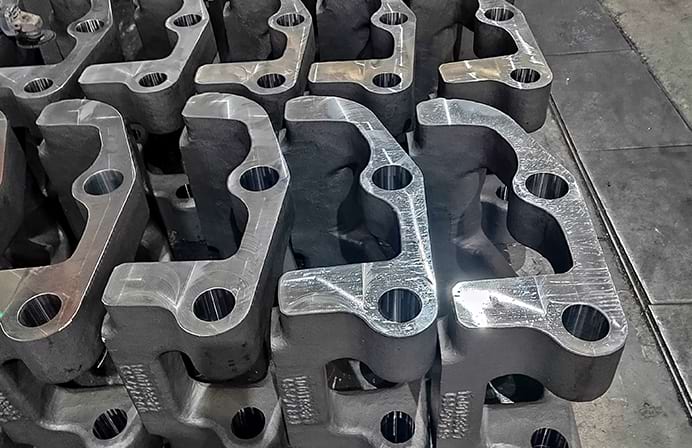
Pumps, valves, and mining machines operate under heavy pressure, constant impact, and abrasive environments. These conditions require materials that provide strength, durability, and reliability. Carbon Steel Casting meets these needs by offering strong structural stability, good wear resistance, and dependable pressure containment. Because of these advantages, it is widely used in pump housings, valve bodies, and mining equipment components.
Carbon steel casting also supports complex shapes and precise designs, especially when advanced processes like investment casting are used. This helps manufacturers reduce machining work while maintaining production efficiency. Jinhong Shukong Machinery Casting Co., Ltd. provides high-quality cast components through advanced casting technology and strict quality control. Their carbon steel casting products deliver reliable performance and long service life, creating strong value for pump, valve, and mining applications.
A: Carbon Steel Casting is a manufacturing process where molten carbon steel is poured into molds to create strong industrial components. It is widely used for pump housings, valve bodies, and mining machinery because it provides high strength, wear resistance, and the ability to produce complex shapes.
A: Carbon Steel Casting offers excellent structural stability and pressure resistance. These properties allow pump casings and valve bodies to maintain sealing performance and structural integrity even in high-pressure and high-temperature industrial systems.
A: Carbon Steel Casting provides strong impact resistance and durability. Mining equipment often works in abrasive environments, so cast carbon steel parts help reduce wear, extend service life, and improve machine reliability.
A: Carbon Steel Casting allows near-net shape production, meaning parts are produced close to their final dimensions. This reduces machining work, lowers material waste, and improves overall production efficiency.
A: Compared with materials such as aluminum or high-alloy steels, Carbon Steel Casting offers a balanced combination of strength, durability, and cost efficiency. It also performs better in heavy-load and abrasive environments.
A: Yes. Carbon Steel Casting can create intricate shapes, internal channels, and reinforced structures. This capability makes it ideal for pump impellers, valve bodies, and complex industrial machine parts.


