

Views: 0 Author: Site Editor Publish Time: 2026-03-11 Origin: Site


In metal manufacturing, terminology can easily create confusion. A common example is the difference between cast steel and Carbon Steel Casting. Many engineers and buyers use these terms interchangeably, even though they refer to different aspects of steel production. In simple terms, cast steel describes a manufacturing process in which molten steel is poured into molds to form components. Carbon Steel Casting, however, refers to a material type—an iron-carbon alloy used to produce strong and durable cast parts. Understanding this distinction helps manufacturers choose suitable materials for equipment such as valves, gears, and heavy machinery components.
In this article, we explain the key differences between cast steel and Carbon Steel Casting, including their definitions, composition, properties, and common industrial applications.
Cast steel refers to steel parts created through the metal casting process. In this process, molten steel is poured into a mold, allowed to cool, and then solidified into the desired shape.
Because it describes a process rather than a material, cast steel can include many types of steel, such as:
● Carbon steel
● Alloy steel
● Stainless steel
● Heat-resistant steel
● Wear-resistant steel
The key idea is simple: cast steel focuses on the production method. It tells us the steel was shaped through casting rather than forging or rolling.
This process allows manufacturers to produce complex components that may be difficult or expensive to machine from solid metal.
Carbon Steel Casting refers to cast components made specifically from iron-carbon alloys. These alloys mainly contain iron and carbon, along with small amounts of elements such as silicon, manganese, sulfur, and phosphorus.
Carbon steel is widely used because it provides a strong balance between:
● Strength
● Durability
● Machinability
● Cost efficiency
Manufacturers can also adjust carbon content to change mechanical properties. This flexibility makes Carbon Steel Casting suitable for a wide range of industrial components.
To understand the relationship clearly, consider the following structure:
Category | Description |
Cast Steel | A production method where molten steel is poured into molds |
Carbon Steel Casting | A material type made from iron-carbon alloy that is produced through casting |
This means:
● Every Carbon Steel Casting is a cast steel product.
● But not every cast steel component is made from carbon steel.
Some cast steel parts may use stainless steel or alloy steel instead.
Several factors cause confusion between these two terms:
● They are often used together in foundry discussions
● Many steel castings are made from carbon steel
● Technical specifications sometimes shorten the terms
However, when designing industrial components, the difference matters. Engineers must define both:
● Manufacturing method
● Material composition
Doing so ensures consistent performance and quality.
Note: When ordering cast components, always specify both the casting process and the steel grade to avoid production misunderstandings.
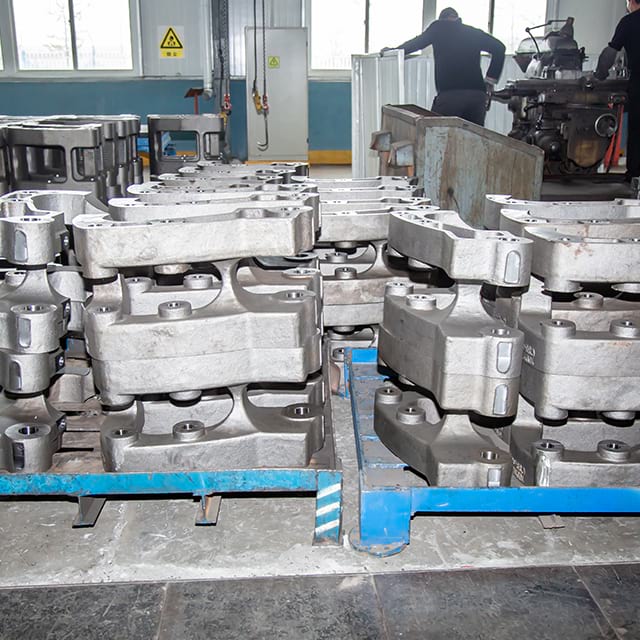
Steel materials mainly consist of iron and carbon. The carbon level strongly influences the metal's hardness and strength.
Carbon Steel Casting typically falls within a controlled carbon range. Foundries adjust this level to balance properties such as:
● Strength
● Toughness
● Machinability
Higher carbon increases hardness and strength, while lower carbon improves ductility and weldability.
While Carbon Steel Casting mainly relies on iron and carbon, other steel castings may contain additional alloying elements such as:
● Chromium
● Nickel
● Molybdenum
● Vanadium
These elements improve specialized properties like corrosion resistance or heat tolerance.
Carbon steel castings keep alloy content relatively simple. This simplicity helps maintain reliable mechanical performance while controlling production cost.
Carbon Steel Casting usually falls into three general categories, as shown in the table below.
Grade Type | Carbon Content | Typical Characteristics |
Low-carbon steel | Lower carbon percentage | Excellent ductility and weldability |
Medium-carbon steel | Moderate carbon level | Balanced strength and toughness |
High-carbon steel | Higher carbon percentage | Higher hardness and wear resistance |
Manufacturers select these grades based on the mechanical demands of the final component.
Tip: For heavy mechanical parts that experience both impact and load, medium-carbon steel castings often provide the most balanced performance.
One of the biggest advantages of Carbon Steel Casting is its high tensile strength. It can support significant loads without permanent deformation.
This makes it suitable for components such as:
● Gear housings
● Structural brackets
● Mining machinery parts
● Industrial equipment frames
These parts must handle heavy operational forces.
Carbon Steel Casting is valued for its ability to withstand sudden impact and repeated mechanical stress. The material can absorb shock while maintaining structural stability, which helps prevent deformation or cracking during operation. Because of this strength–toughness balance, it is widely used in industries where equipment operates under dynamic loads and continuous vibration.
Industry | Typical Equipment or Components | Why Impact Resistance Matters |
Mining Operations | Crushers, excavator parts, conveyor structures | Equipment often experiences heavy impact from rocks and ores, so components must absorb shock and resist cracking. |
Construction Machinery | Structural frames, gear housings, heavy machine parts | Machines operate under continuous load and vibration, requiring materials that maintain strength during repeated stress cycles. |
Transportation Systems | Couplers, support brackets, mechanical connectors | Components must handle dynamic forces during movement and operation while maintaining long-term structural reliability. |
Many carbon steel grades offer excellent weldability. This makes repairs, modifications, and assembly easier during equipment installation or maintenance.
It also simplifies fabrication of large equipment frames where welded joints are common.
Another benefit of Carbon Steel Casting is its compatibility with heat treatment processes.
Common treatments include:
● Quenching
● Tempering
● Normalizing
These processes improve hardness, strength, and wear resistance depending on the final application.
Casting technology allows manufacturers to produce parts with complex geometries. Internal channels, curved surfaces, and irregular shapes are easier to create using molds.
Compared with machining from solid steel blocks, casting often reduces material waste and manufacturing cost.
Carbon Steel Casting works well for both small and large components.
Examples include:
● Small valve bodies
● Medium-size pump housings
● Large structural machine parts weighing several tons
This scalability makes casting suitable for many industries.
Experienced foundries adjust alloy composition and process parameters to meet project requirements.
For example, Jinhong provides customized casting and machining services. Their production capabilities include materials such as carbon steel, stainless steel, ductile iron, and wear-resistant alloys. By controlling chemical composition and casting conditions, they ensure components meet specific strength and durability requirements.
Note: Choosing a foundry with strong metallurgical control improves casting quality and reduces production defects.
Mining and construction machinery often use carbon steel castings for components such as:
● Crusher frames
● Excavator parts
● Conveyor structures
● Gear housings
These parts must withstand continuous impact and heavy loads.
Carbon Steel Casting is widely used in oil and gas systems for parts including:
● Valve bodies
● Pump casings
● Pipeline fittings
These components require strong structural integrity and reliable long-term performance.
Railway and transportation industries rely on carbon steel castings for parts such as:
● Train couplers
● Structural brackets
● Mechanical support components
The material provides strong mechanical reliability for safety-critical systems.
Power generation equipment also uses Carbon Steel Casting for:
● Turbine casings
● Generator frames
● Industrial machinery supports
These components must operate reliably under continuous mechanical stress.
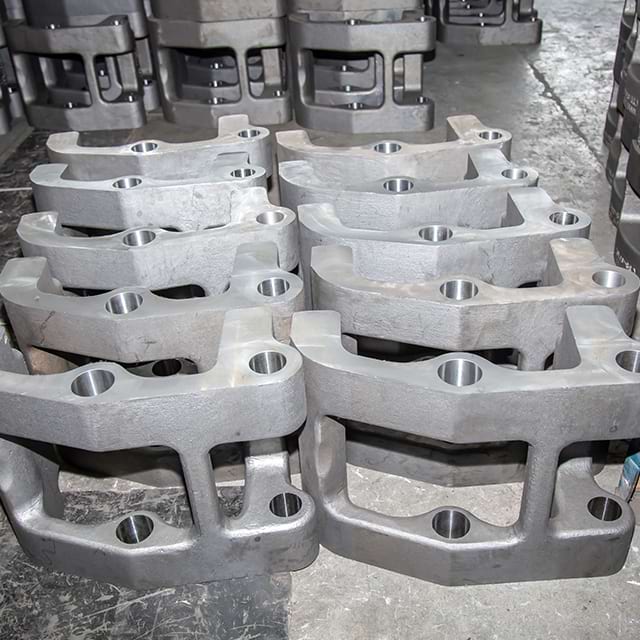
Key Advantage | What It Means |
Strength & Toughness | Handles heavy loads without cracking |
Design Flexibility | Supports complex and custom shapes |
Cost Efficiency | Strong performance at lower cost |
Carbon Steel Casting offers excellent mechanical strength while maintaining enough toughness to resist cracking or deformation.
This balance makes it suitable for demanding industrial environments.
Casting molds allow engineers to create components with customized shapes and structures.
Manufacturers can adjust carbon content and alloy composition to match specific engineering requirements.
Compared with highly alloyed steels, Carbon Steel Casting often provides strong performance at a more economical price.
For many industrial applications, it offers an ideal combination of performance, availability, and production efficiency.
The first step in selecting the right casting material is to clearly define the performance requirements of the component. Engineers usually evaluate several key mechanical factors to ensure the material can perform reliably in its working environment.
Property | What It Means in Practice |
Load Capacity | Ability of the component to support heavy mechanical loads without deformation |
Impact Resistance | Capability to withstand sudden shocks or dynamic forces during operation |
Wear Resistance | Resistance to surface damage caused by friction or repeated contact |
Structural Reliability | Long-term stability and safety under continuous working conditions |
Environmental conditions also influence material choice. Engineers must consider:
● Operating temperature
● Mechanical stress levels
● Exposure to moisture or chemicals
These factors affect long-term durability.
The final step is matching the material to the product design and manufacturing process.
Professional foundries can assist in this process. Companies such as Jinhong, with extensive casting experience, help clients determine the most suitable steel casting solution based on application requirements, mechanical properties, and production needs.
Tip: Early collaboration between equipment designers and casting suppliers often improves component performance and reduces production costs.
Cast steel and Carbon Steel Casting sound similar, yet they describe different ideas in metal manufacturing. Cast steel refers to the casting process, while Carbon Steel Casting refers to the iron-carbon material used to produce strong industrial parts.
Understanding this difference helps engineers choose suitable materials for heavy equipment and structural components. Jinhong Shukong Machinery Casting Co., Ltd. provides reliable carbon steel castings with strong durability, precise machining, and customized manufacturing solutions for industrial applications.
A: The key difference lies in definition. Cast steel refers to a manufacturing process where molten steel is poured into molds to create components. Carbon Steel Casting refers to a specific iron-carbon alloy used in that process to produce durable industrial parts.
A: Yes. Carbon Steel Casting is a subset of cast steel. All carbon steel castings are produced using the cast steel process, but cast steel can also include other materials such as alloy steel or stainless steel.
A: Carbon Steel Casting offers a strong balance of strength, toughness, and machinability. These properties make it suitable for heavy-duty components such as gears, valve bodies, machine frames, and mining equipment parts.
A: Engineers evaluate the required mechanical properties, working environment, and load conditions. If strength, durability, and cost efficiency are priorities, Carbon Steel Casting is often selected for structural and mechanical components.
A: Carbon Steel Casting is widely used in industries such as mining, oil and gas, transportation, power generation, and heavy machinery manufacturing because it performs well under high stress and demanding operating conditions.
A: In many cases, Carbon Steel Casting offers a good balance between performance and cost. It delivers strong mechanical properties while remaining more economical than highly alloyed steels, making it suitable for large-scale industrial production.


