

Views: 0 Author: Site Editor Publish Time: 2026-03-18 Origin: Site


Heavy equipment works where conditions are harsh and unforgiving. Mining machines crush rock under intense pressure. Construction equipment absorbs constant vibration and impact. How do these machines survive such extreme stress every day? The answer often lies in the materials used inside critical components. Strength, durability, and reliability determine whether equipment performs efficiently or fails too soon. Among many manufacturing methods, Carbon Steel Casting stands out for its ability to produce strong, complex parts built for demanding environments.
In this article, we explore the hidden advantages of Carbon Steel Casting in heavy equipment. You will learn how it improves structural strength, design flexibility, and long-term performance. We will also look at how experienced manufacturers like Jinhong help industries produce reliable machinery components for mining, construction, and energy systems.
Heavy equipment must handle enormous mechanical forces. Excavators lift tons of material. Hydraulic presses apply intense pressure. Crushers process rock and ore under heavy loads.
Carbon Steel Casting offers the structural strength required for these applications. Carbon steel contains a balanced composition of iron and carbon, allowing it to achieve high tensile and compressive strength. These properties help equipment maintain structural integrity even under continuous heavy stress.
For example, components such as:
● Excavator arms
● Crusher frames
● Gear housings
● Hydraulic cylinders
must maintain their shape while carrying massive loads. Cast carbon steel parts provide the necessary strength while maintaining reliability over long service cycles.
Industrial machinery rarely operates under steady conditions. Instead, it faces sudden shocks, repeated impacts, and heavy vibration. In mining equipment, rock fragments constantly strike machine surfaces. Construction machinery often experiences unpredictable loads.
Carbon steel castings absorb these forces effectively. Their microstructure allows them to handle sudden impact without cracking. This toughness helps prevent structural failure and improves machine safety.
As a result, many manufacturers rely on carbon steel for components exposed to dynamic loads, including:
● Crusher jaws
● Excavator buckets
● Rail couplings
● Heavy-duty brackets
These parts must survive thousands of impact cycles without losing performance.
Heavy machinery often works in environments that accelerate wear and fatigue. Dust, abrasive materials, moisture, and high temperatures can quickly degrade weaker materials.
Carbon steel casting performs well in such conditions. Its durability allows components to maintain structural strength over long periods. When combined with proper surface treatments and heat treatment processes, these parts gain even greater resistance to wear.
Because of this durability, carbon steel components can remain operational for years without major structural degradation.
One key advantage of carbon steel lies in its flexibility. Engineers can adjust mechanical properties through heat treatment processes such as:
● Normalizing
● Quenching and tempering
● Annealing
These processes change the steel’s microstructure. As a result, manufacturers can tailor properties like hardness, toughness, and wear resistance.
For instance:
Heat Treatment Process | Resulting Property |
Annealing | Improved ductility |
Quenching | Increased hardness |
Tempering | Balanced toughness and strength |
This flexibility allows engineers to design components optimized for specific heavy equipment functions.
Safety is a major concern in heavy machinery operations. Structural failures can cause severe downtime, expensive repairs, or serious safety hazards.
Carbon steel castings provide dependable structural integrity. Their strength and toughness help maintain stable machine operation even under extreme working conditions.
Typical safety-critical components include:
● Gearboxes
● Structural frames
● Bearing housings
● Heavy-duty connectors
When these parts are produced using reliable casting techniques, they maintain performance across demanding industrial cycles.
Tip: When designing safety-critical components, engineers often specify heat-treated carbon steel grades to balance strength and toughness.
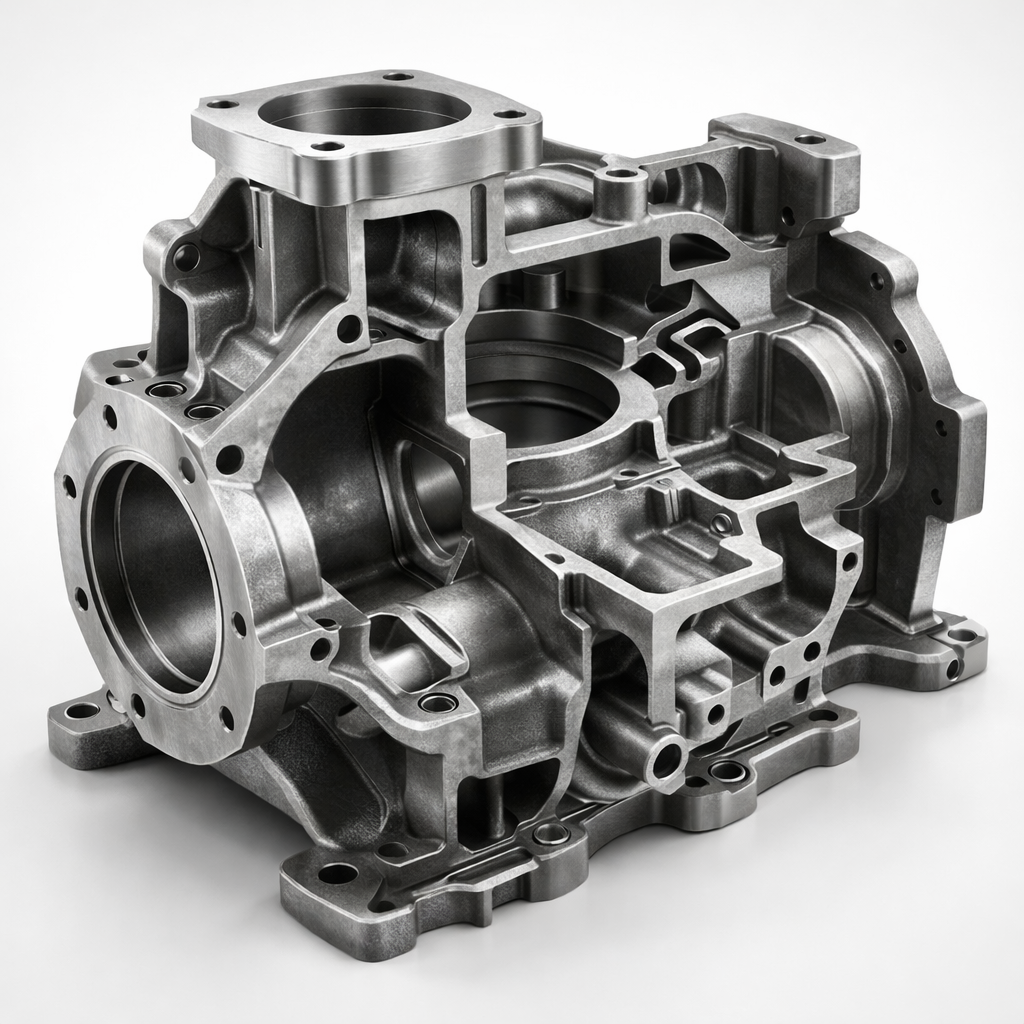
Many heavy machinery components have complicated shapes. Internal cavities, thick support ribs, and irregular curves often appear in equipment designs. Producing these shapes through traditional machining can be expensive and time-consuming.
Casting solves this problem.
With Carbon Steel Casting, molten metal fills a mold that precisely matches the part design. Once solidified, the component retains the required geometry with minimal additional machining.
This method allows engineers to design complex components without worrying about excessive manufacturing limitations.
Another benefit of casting lies in near-net-shape manufacturing. The final part comes very close to the desired dimensions after casting.
This reduces the need for extensive machining operations. Less machining brings several advantages:
● Shorter production cycles
● Lower manufacturing costs
● Reduced material waste
Investment casting processes can achieve high dimensional accuracy and smooth surface finishes. These qualities are valuable for precision components used in industrial machinery.
Every industry has unique equipment requirements. Mining machines differ from construction equipment. Metallurgical plants use different machinery than transportation systems.
Carbon steel casting allows engineers to customize components according to specific operational needs.
Manufacturers like Jinhong work closely with equipment producers to design cast components that match these specialized applications. Through collaboration, they can adjust material grades, casting structures, and machining specifications to meet exact requirements.
This level of customization supports efficient machine design and optimized equipment performance.
Carbon steel delivers strong mechanical performance without excessive material cost. Compared with many alloy steels, it provides excellent strength at a lower price.
This balance makes it an attractive material for large industrial components. Manufacturers can maintain high performance while controlling production budgets.
Durability directly affects maintenance costs. If components wear quickly or fail under stress, equipment requires frequent repairs.
Carbon steel castings reduce this risk. Their strength and toughness allow them to operate longer before needing replacement.
Lower maintenance frequency leads to:
● Reduced service costs
● Improved machine availability
● Lower spare part inventory requirements
Downtime creates serious losses in many industrial environments. Mining sites, construction projects, and production facilities depend on machines running continuously. When key components fail, operations may stop unexpectedly. Reliable carbon steel components help reduce this risk. Their strength and durability allow machines to operate under heavy stress while maintaining stable performance.
The operational benefits can be summarized below:
Operational Factor | How Carbon Steel Components Help | Result for Operations |
Equipment Reliability | Strong structural integrity resists fatigue and heavy loads | Fewer unexpected machine failures |
Production Continuity | Durable components maintain stable performance during long cycles | More stable production schedules |
Maintenance Frequency | High durability reduces frequent repairs or replacements | Fewer interruptions during operation |
Operational Efficiency | Reliable parts keep machines running longer without stoppage | Higher overall productivity |
Heavy machinery often requires massive components. Some parts weigh several tons and include complex structural shapes.
Casting allows manufacturers to produce these parts efficiently. Instead of assembling multiple pieces through welding or machining, they can produce a single integrated component.
This approach improves structural strength and reduces assembly complexity.
Carbon steel casting supports a wide range of industrial sectors. Each industry benefits from its strength, durability, and design flexibility.
Mining equipment processes extremely abrasive materials. Crushers break rocks. Mills grind minerals. Conveyors transport heavy ore loads.
Carbon steel castings are commonly used for:
● Crusher frames
● Mill housings
● Conveyor components
These parts must resist heavy wear and repeated impact.
Construction equipment performs constant lifting, digging, and material handling. Structural strength is essential.
Carbon steel castings appear in components such as:
● Excavator arms
● Bulldozer blades
● Crane hooks
● Structural supports
These parts must maintain performance under heavy loads and vibration.
Energy systems and metallurgical facilities require strong components capable of operating under heat and pressure.
Common applications include:
Industry | Cast Component | Function |
Power generation | Turbine casing | Pressure containment |
Metallurgical plants | Furnace structure | Heat resistance |
Hydraulic systems | Press frame | Load support |
Companies like Jinhong supply cast components to these sectors. Their manufacturing experience helps ensure reliability and dimensional accuracy for demanding industrial equipment.
After casting, many components require finishing operations such as drilling, milling, or turning.
Carbon steel offers good machinability, especially in lower carbon grades. This allows manufacturers to produce precise mechanical interfaces and mounting surfaces.
As a result, cast components can easily integrate into complex mechanical assemblies.
In heavy equipment manufacturing, many components must be joined or adjusted during assembly and maintenance. Materials that support reliable welding make this process easier and more efficient. Carbon steel performs well in welding applications, which allows manufacturers and maintenance teams to handle structural assembly and equipment repairs more smoothly.
The practical advantages of this weldability can be summarized below:
Welding Advantage | Practical Application | Operational Benefit |
Easier Equipment Assembly | Components can be welded directly into machine structures | Faster and more flexible equipment assembly |
Efficient Structural Modifications | Parts can be adjusted or reinforced through welding | Simplifies design updates or upgrades |
Simplified Maintenance Repairs | Damaged sections can be repaired through welding | Reduces repair time and maintenance complexity |
Carbon steel castings support a variety of secondary manufacturing processes, including:
● Thread cutting
● Surface finishing
● Coating and plating
● Heat treatment
These additional processes enhance durability and improve corrosion resistance.
Tip: Applying protective coatings or surface hardening treatments can further extend the lifespan of cast carbon steel components.
Steel is one of the most recyclable industrial materials. Carbon steel components can be melted and reused multiple times without losing essential mechanical properties.
This recyclability supports sustainable manufacturing practices and reduces raw material consumption.
Durable components last longer. Longer service life means fewer replacements and less material waste over time.
Carbon steel casting contributes to this sustainability by producing robust components capable of extended operational cycles.
For industries operating large equipment fleets, longer component lifespans significantly reduce overall material consumption.
Heavy equipment works under extreme loads and harsh environments. Components must remain strong, durable, and reliable for long operating cycles. Carbon Steel Casting provides a practical solution for these demands. It combines structural strength, design flexibility, and cost efficiency, making it suitable for many critical machinery components used in mining, construction, and energy equipment.
Industries continue to rely on carbon steel castings to improve equipment performance and productivity. Jinhong Shukong Machinery Casting Co., Ltd. delivers high-quality casting solutions designed for demanding industrial applications. Through experienced engineering and advanced manufacturing processes, their products help improve equipment durability, operational stability, and long-term value.
A: Carbon Steel Casting is a process where molten carbon steel is poured into molds to create strong industrial components. It allows manufacturers to produce complex shapes used in heavy machinery such as crusher frames, excavator parts, and turbine housings.
A: Carbon Steel Casting offers high strength, durability, and resistance to heavy loads. These qualities help machinery operate reliably in harsh environments like mining, construction, and metallurgical operations.
A: Carbon Steel Casting improves durability because the material absorbs shock and resists fatigue. Components maintain structural stability even under continuous vibration, heavy impact, and abrasive working conditions.
A: Yes. Carbon Steel Casting is considered cost-effective because it combines strong mechanical performance with efficient production. The casting process also reduces machining requirements, lowering manufacturing and maintenance costs.
A: Industries such as mining, construction, energy, transportation, and metallurgy benefit greatly from Carbon Steel Casting. These sectors rely on durable structural components capable of handling heavy loads and extreme working environments.
A: Compared with machining or welded fabrication, Carbon Steel Casting allows engineers to create complex shapes in one piece. This improves structural strength, reduces assembly work, and increases overall reliability for heavy equipment components.


