Views: 0 Author: Site Editor Publish Time: 2026-01-08 Origin: Site


Designing stainless steel castings for high-pressure equipment is no small feat. High-pressure environments demand materials that can endure immense mechanical stress while maintaining performance. Stainless steel, with its superior strength and resistance to corrosion, is often the material of choice.
In this article, we’ll explore the key principles of designing stainless steel castings, from material selection to manufacturing methods. You’ll learn how to choose the right steel grades and ensure your designs are both reliable and cost-effective for high-pressure applications.
Stainless steel is widely used in high-pressure equipment due to its unique combination of properties. Below is a summary of its key characteristics:
Property | Key Feature |
Corrosion Resistance | Protects against damage in harsh, chemically aggressive environments. |
Strength at Room and Elevated Temperatures | Maintains strength under both standard and high temperatures, essential for pressure resistance. |
Stress Corrosion Cracking (SCC) Resistance | Prevents failure from prolonged exposure to high-stress conditions. |
When selecting stainless steel for high-pressure applications, it’s essential to choose the right grade for optimal performance. Below are some commonly used grades, each with unique advantages for specific high-pressure environments:
● Duplex Stainless Steels (e.g., CD3MN, CD4MCu)
These steels are favored for their high yield strength (almost double that of austenitic steels) and outstanding resistance to stress corrosion cracking. They strike a perfect balance between mechanical strength and corrosion resistance.
● Austenitic Stainless Steels
Known for their superior ductility and formability, austenitic steels are generally not as effective in high-pressure environments where corrosion resistance is a top priority.
For high-pressure equipment, duplex stainless steels are often the best option when strength and corrosion resistance are critical.
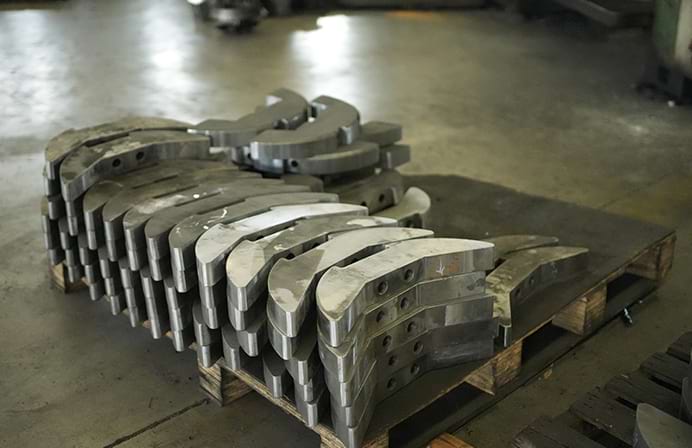
The structural integrity of high-pressure stainless steel castings is paramount to their performance in high-pressure applications. A key design principle is ensuring uniform wall thickness across the casting. This approach helps in achieving consistent cooling rates, which reduces the likelihood of defects such as shrinkage cavities and warping. The consistency in thickness prevents areas of weak points, which are particularly critical under high pressure.
Additionally, the casting process must be designed to minimize stress during cooling and solidification. Sudden changes in geometry or thickness can lead to internal stresses, so careful design consideration must be given to smooth transitions between different sections of the casting.
Stress concentrations are one of the most common causes of failures in high-pressure castings. To avoid these, castings should include generous radii and fillets where geometries change. Sharp corners and abrupt transitions should be avoided as they can lead to localized stress, making these sections more susceptible to cracking under pressure.
To minimize the risk of stress concentrations, always incorporate smooth transitions and fillets in your design, especially where the geometry changes.
Designing stainless steel castings requires consideration of the manufacturing process. Parts must be designed for ease of core removal, inspection, and post-casting operations. This includes providing adequate openings for internal core removal and ensuring that there is easy access for inspection and machining. Complex geometries should be avoided unless absolutely necessary, as they can increase costs and complicate the manufacturing process.
Always consult with foundry engineers during the design phase to optimize manufacturability and reduce post-casting challenges.
Design Principle | Key Focus |
Uniform Wall Thickness | Ensures even cooling, reduces defects, prevents weak points. |
Smooth Transitions and Fillets | Reduces stress concentrations, prevents cracking. |
Design for Manufacturability and Accessibility | Ensures easy core removal, inspection, and machining. |
Selecting the right material for high-pressure stainless steel castings is critical. Castings exposed to corrosive environments must be made from materials that offer superior corrosion resistance. Common challenges include exposure to chlorides, sulfuric acid, or other reactive chemicals. In addition, high-pressure equipment often operates at elevated temperatures, making heat resistance a key factor in material selection.
Stainless steel grades such as super duplex steels offer excellent performance in both corrosion resistance and high-temperature strength, making them ideal for high-pressure applications in the chemical and marine industries.
High-pressure applications demand stainless steel that can withstand not just high pressures but also high mechanical stresses. Materials must be selected based on properties such as tensile strength, hardness, and toughness. Duplex steels, as mentioned earlier, provide significantly higher yield strength than austenitic steels and have excellent resistance to stress corrosion cracking (SCC), making them suitable for demanding environments.
When designing for high-pressure applications, prioritize stainless steel grades with high yield strength and SCC resistance.
Material Property | Key Consideration | Key Focus |
Corrosion Resistance | Ability to resist damage from chemicals. | Protects against chlorides, sulfuric acid, and other chemicals. |
Heat Resistance | Withstands high temperatures in extreme environments. | Ensures performance at elevated temperatures in high-pressure conditions. |
Mechanical Properties | Strength to resist mechanical stresses and pressure. | Focus on tensile strength, hardness, and toughness. |
Stress Corrosion Cracking (SCC) Resistance | Ability to avoid failure under prolonged stress. | Prevents material breakdown in high-pressure environments. |
For high-pressure equipment, the casting method plays a significant role in achieving precise and reliable results. Investment casting is often the preferred method due to its ability to create complex geometries with tight tolerances. Investment casting also provides a smooth surface finish, reducing the need for additional post-processing.
Compared to other casting methods, investment casting is ideal for high-pressure applications where precision and reliability are critical. However, the process can be more expensive due to the high precision required.
The gating system and risers are integral parts of the casting process. Gating systems control the flow of molten metal into the mold, ensuring that the material fills the cavity efficiently. Risers are designed to compensate for material contraction during cooling, preventing defects like porosity.
An effective gating and riser design ensures that the final product is free of casting defects, such as shrinkage cavities, which are critical to ensuring the performance of high-pressure equipment.
After casting, heat treatment is often required to enhance the mechanical properties of stainless steel. Solution annealing is a common heat treatment for austenitic steels, which helps relieve internal stresses and improves toughness. Additionally, rigorous quality control through tests like tensile testing, impact testing, and hardness testing ensures that the castings meet the required specifications and performance standards.
Heat treatment processes should always be tailored to the specific stainless steel grade used in your design to optimize mechanical properties.
Process Consideration | Key Focus |
Casting Method | Investment casting for precision, smooth finish, and tight tolerances. |
Gating and Risers | Gating systems ensure efficient flow; risers prevent defects like porosity. |
Heat Treatment and Quality Control | Heat treatment improves mechanical properties; quality control ensures standards. |
Designing stainless steel castings involves balancing material performance with manufacturability. High-performance materials, like duplex steels, offer superior strength and corrosion resistance but come at a higher cost. In some cases, a lower-cost material might be selected, which may not perform as well in extreme conditions but still meets the necessary requirements for less demanding applications.
● Duplex Steels: Higher cost but excellent corrosion resistance and strength, ideal for high-pressure applications.
● Lower-Cost Materials: May not offer the same performance in extreme conditions but can be suitable for less demanding environments.
Designing complex geometries for high-pressure stainless steel castings is often necessary for specific equipment but can pose challenges in stress distribution. Irregular shapes can lead to stress concentrations, increasing the risk of cracking or deformation during operation. It’s essential to consider the flow of molten metal and cooling rates to ensure uniform stress distribution.
For complex geometries, always perform finite element analysis (FEA) to model stress distribution and identify potential weak spots in the design.
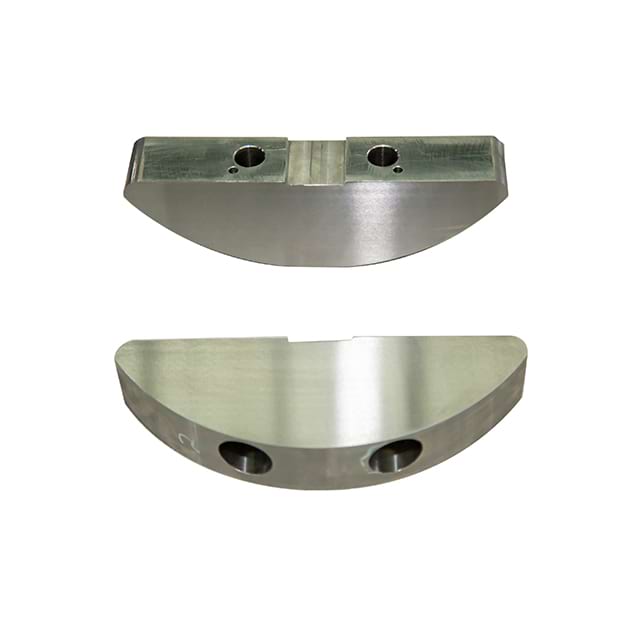
High-pressure stainless steel castings are critical in the aerospace industry. Aerospace engines, for example, require components that can withstand extreme temperatures and pressures. Duplex stainless steels are often used in turbine blades, casings, and other critical engine components, providing the necessary strength and corrosion resistance.
Stainless steel castings also play a crucial role in automotive and industrial applications. For instance, engine parts such as valve bodies and exhaust systems benefit from stainless steel’s high heat resistance and durability under pressure. Pressure valves and hydraulic systems also utilize stainless steel castings to ensure reliability in demanding industrial environments.
Application Area | Key Uses | Materials Used |
Aerospace | Turbine blades, casings, engine components requiring strength and corrosion resistance. | Duplex stainless steels |
Automotive and Industrial | Engine parts, valve bodies, exhaust systems, pressure valves, hydraulic systems requiring heat resistance and durability. | Stainless steel |
Designing stainless steel castings for high-pressure equipment requires expertise in material selection, structural design, and manufacturing processes. By focusing on corrosion resistance, strength, and manufacturability, designers can create reliable components for extreme conditions. Collaboration with foundry engineers is key to optimizing designs for high-quality castings. With the right materials and design, high-pressure equipment can be durable and efficient. Jinhong Shukong Machinery Casting Co., Ltd. offers premium stainless steel castings, providing products that ensure reliability and performance for demanding applications.
A: Stainless steel casting involves pouring molten stainless steel into molds to create components. It's ideal for high-pressure equipment due to its strength, corrosion resistance, and ability to withstand extreme conditions.
A: When choosing stainless steel casting, focus on factors like corrosion resistance, strength, and material properties. Duplex stainless steels, such as CD3MN and CD4MCu, are commonly used for high-pressure applications.
A: Uniform wall thickness ensures even cooling and prevents defects like shrinkage and warping, which is crucial for maintaining the integrity of stainless steel castings under high-pressure conditions.
A: Stainless steel casting offers durability, corrosion resistance, and high strength, making it ideal for high-pressure environments where other materials may fail.
A: Proper gating and riser design ensures the molten metal flows smoothly, preventing defects like shrinkage cavities and ensuring the structural integrity of the final stainless steel casting.