


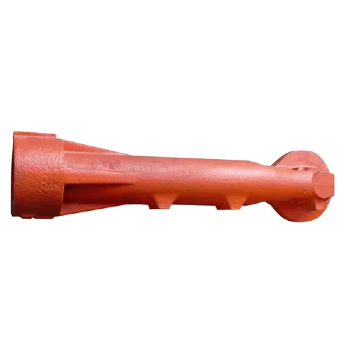
Sand casting is one of the oldest and most versatile methods for producing metal parts. It’s widely used in industries such as automotive, aerospace, and manufacturing to create parts ranging from small components to large, heavy industrial products. Despite its ancient origins, sand casting remains a vital process because of its simplicity, low cost, and versatility in handling a variety of metals.
In this comprehensive guide, we’ll walk you through the process of sand casting, explaining each step in detail so you can understand how it works. Whether you’re looking to learn it for personal use or to improve your manufacturing process, this guide will cover everything you need to know, from preparation to finishing.
Sand casting, also known as sand molding, is a metal casting process in which molten metal is poured into a mold made of sand. The mold is created by compacting a sand mixture around a pattern, which is typically a replica of the desired object. After the mold is made, molten metal is poured into the cavity created by the pattern. Once the metal cools and solidifies, the sand mold is broken away, revealing the finished casting.
Before diving into the step-by-step process, let's first review the essential components involved in sand casting:
Pattern: The model or replica of the object you want to cast. Patterns are typically made from materials like wax, plastic, or metal, and they can either be solid or hollow depending on the design.
Mold: The cavity that forms the shape of the final casting. The mold is made by packing sand around the pattern.
Core: In cases where the casting needs to have hollow spaces (e.g., internal passages), a core is inserted into the mold to form these features.
Binder: A substance (often clay or resin) used to bind the sand particles together, ensuring the mold holds its shape.
Molten Metal: The liquid metal that will fill the mold and solidify to form the casting.
Finishing: After the casting has cooled, it may need additional processes like grinding, machining, or polishing to achieve the final product.
The first step in the sand casting process is to create the pattern. The pattern is a representation of the final part you want to produce. The material used for the pattern depends on the size, shape, and production volume of the casting.
Materials for Patterns: Patterns can be made from wood, metal, plastic, or even wax. The choice of material depends on the complexity of the part, the metal being cast, and the expected production volume.
Shrinkage Allowance: Metal shrinks as it cools, so patterns are typically made slightly larger than the final desired size to account for this shrinkage.
Pattern Design: The pattern needs to include any features that the final casting should have. For example, if the part needs holes or internal passages, these features must be incorporated into the pattern design.
Once the pattern is ready, it is used to create the mold. The mold is made from a mixture of sand, binder, and sometimes water. The basic process for mold making involves packing the sand mixture around the pattern, forming a mold cavity.
Drag and Cope: The most common mold type in sand casting is a two-part mold made of two sections: the "drag" (the bottom half of the mold) and the "cope" (the top half of the mold). The pattern is placed in the drag section, and sand is packed around it. Then, the cope section is placed on top, and more sand is packed around it to form the full mold.
Parting Line: The point where the cope and drag sections meet is called the parting line. A clear parting line is crucial for easily separating the mold halves after the casting is finished.
Green Sand: This is the most common mold material, which consists of sand, clay, and water. Green sand molds are typically used for small to medium-sized castings.
Dry Sand: Dry sand molds are made from sand that has been mixed with a binding agent and then dried to increase strength. These molds are often used for large and complex parts.
Shell Molds: For precise castings, a shell mold may be used. This involves coating a pattern with a ceramic shell to form a strong, durable mold.
Some castings require hollow spaces or internal features that cannot be created by the mold alone. These spaces are formed using a core, which is placed inside the mold cavity before pouring the molten metal.
Core Materials: Cores are typically made of a similar sand mixture as the mold but with higher strength to withstand the molten metal. Cores can also be made from metal for high-strength applications.
Core Placement: Cores must be placed carefully inside the mold to ensure they stay in position during the pouring process. Cores are typically supported by pins or other mechanisms to keep them in place.
Once the mold and core (if needed) are ready, the next step is to prepare the molten metal. The type of metal used depends on the specific requirements of the casting. Common metals for sand casting include aluminum, cast iron, steel, and copper alloys.
Melting Furnace: The metal is melted in a furnace at high temperatures. The temperature of the molten metal must be carefully controlled to ensure it flows easily into the mold and solidifies properly.
Pouring: The molten metal is then carefully poured into the mold cavity. The pouring process must be done at a controlled rate to avoid turbulence and ensure that the mold is filled evenly. The mold must also be filled completely to avoid voids or incomplete castings.
After the molten metal is poured into the mold, it begins to cool and solidify. The cooling rate depends on the thickness of the casting and the type of metal used. This process can take anywhere from a few minutes to several hours, depending on the size of the casting.
Shrinkage: As the metal cools, it shrinks, which can affect the final dimensions of the casting. To compensate for this, the pattern is typically made slightly larger than the final desired dimensions.
Once the metal has fully cooled and solidified, the mold is broken apart to reveal the casting. This process can involve vibration, shaking, or manual removal of the sand. The mold is usually destroyed in this process, but in some cases, the sand can be reused for future molds.
Sand Removal: The casting is then cleaned by removing any remaining sand or mold material. This is typically done by sandblasting, washing, or grinding the surface.
Excess Metal Removal: If there are any excess metal pieces, like sprues (extra material used to guide the molten metal into the mold), these are removed by cutting or grinding.
The final step in the sand casting process is finishing. This involves additional processes like machining, grinding, polishing, or heat treatment to improve the surface finish, mechanical properties, and dimensional accuracy of the casting.
Machining: Castings may require machining to achieve precise tolerances or smooth surfaces.
Inspection: Each casting is inspected for defects, such as cracks, voids, or improper dimensions. This ensures that only high-quality parts make it to the next step of production.
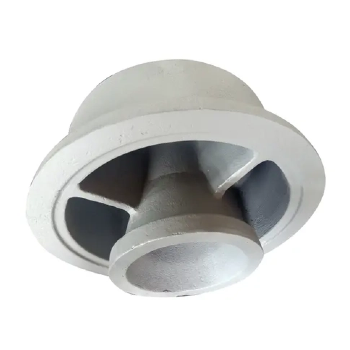
Low Cost: Sand casting is a cost-effective method, particularly for low-volume production or one-off custom parts.
Versatility: It can be used with almost any metal, including ferrous and non-ferrous metals, making it a highly versatile casting method.
Large Part Capability: Sand casting can produce both small and large components, including large machine parts or engine blocks.
Complex Shapes: Sand casting is capable of creating complex shapes, including hollow features, internal channels, and intricate geometries.
Surface Finish: The surface finish of sand-cast parts is typically rough and may require additional post-processing.
Dimensional Accuracy: Sand casting has less precise dimensional tolerances than other casting methods like die-casting.
Labor-Intensive: The process can be labor-intensive, especially if molds and cores are made manually.
Sand casting is a time-tested method that continues to be an essential process in metalworking, offering versatility and cost-efficiency for creating high-quality parts. By following the proper steps—from creating the pattern to finishing the casting—businesses and hobbyists can produce metal components that meet specific design requirements. Whether you’re creating a prototype or mass-producing industrial parts, sand casting remains one of the most reliable and flexible casting methods available.


