

Views: 228 Author: Site Editor Publish Time: 2026-02-12 Origin: Site


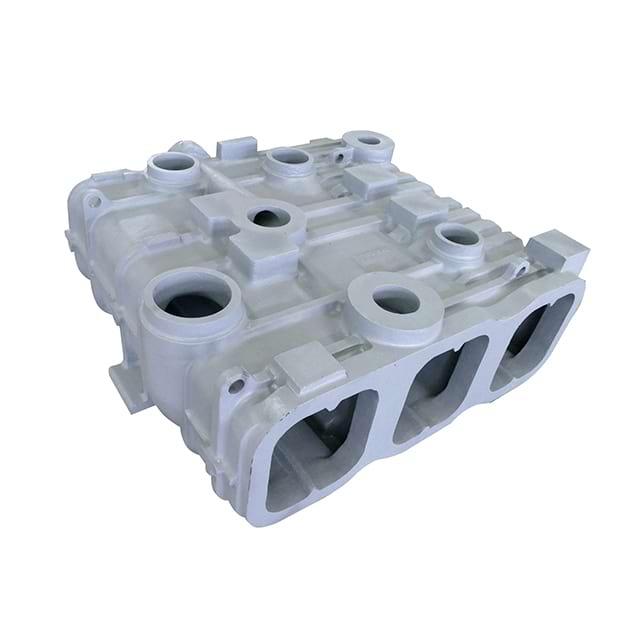
Gray iron is frequently chosen for industrial components due to its superior vibration-damping properties and cost-efficiency. However, these benefits can quickly vanish if undetected defects, such as porosity or inclusions, make their way into the final product. A single internal void can destroy expensive machining tools or cause catastrophic failures in the field. Therefore, inspection is a critical phase in the procurement lifecycle.
The scope of quality control varies significantly depending on the application. A standard counterweight requires different validation protocols than Rugged High-Precision Gray Iron Castings used in hydraulic systems. Understanding this transition is vital for engineering and procurement teams. You must define clear standards to ensure safety without overspending on unnecessary tests.
This guide explains how to evaluate quality beyond simple visual checks. You will learn to validate a supplier’s process control, lowering your Total Cost of Ownership (TCO). Effective inspection is not just about filtering bad parts; it is about ensuring the manufacturing process is robust and repeatable.
Process Over Product: Quality must be verified at the melt stage (pre-pour), not just post-casting.
Material Specificity: Gray iron’s graphite flake structure complicates certain NDT methods (like Ultrasound); specific calibration is required.
Cost vs. Criticality: Matching inspection severity to the part's application class (e.g., abrasion-resistant parts vs. counterweights) prevents bloated costs.
Standardization: While visual standards for iron are ambiguous, using proxies like MSS SP-55 and ASTM A48 is essential for contract clarity.
Quality control is fundamentally an economic exercise. You must balance the cost of inspection against the risk of failure. This relationship is best described by the "Cost of Poor Quality" (COPQ) curve. Identifying a defect at the foundry might cost $1 in scrap value. Finding that same defect at your machine shop, after hours of milling, might cost $100. If that part fails in the field, the cost could skyrocket to $10,000 in warranty claims and reputation damage.
Therefore, the gray iron casting cost on the invoice is only one part of the equation. A slightly higher upfront price for better inspection often yields a lower TCO. Procurement teams should define success criteria based on application criticality.
For General-Purpose components, the focus remains on dimensional fit and basic structural integrity. These parts usually tolerate minor surface imperfections. Over-inspecting them drives up the gray iron casting price without adding value. Conversely, High-Precision or Pressure-Retaining parts demand rigor. These components require density verification, leak-tightness, and specific microstructures to function correctly under stress.
An experienced gray iron casting supplier differentiates themselves through their inspection philosophy. A reliable partner will refuse to over-inspect non-critical areas to save you money. However, they will be unyielding regarding critical surfaces. If a potential supplier agrees to "zero porosity" on every surface of a cheap casting without questioning the cost impact, view it as a red flag. Real expertise involves navigating these trade-offs honestly.
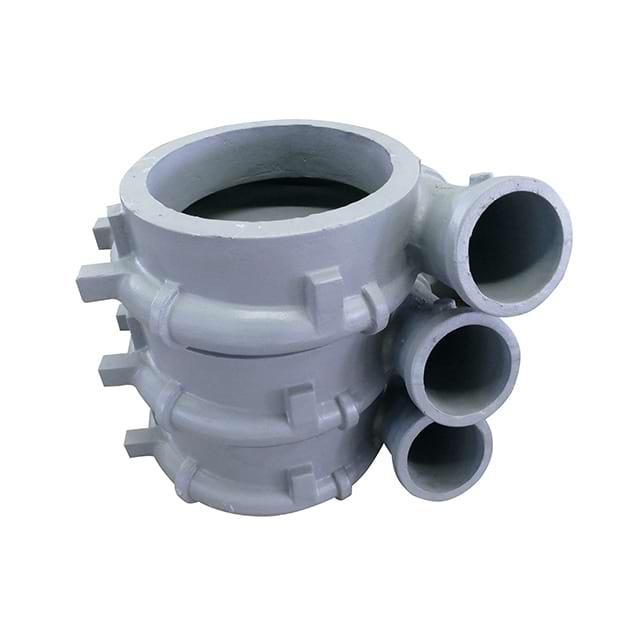
Quality cannot be inspected into a product; it must be manufactured into it. The most effective inspection happens before the metal ever enters the mold. Once solidification begins, the chemistry is locked in. Therefore, validation during the melt stage acts as the primary preventive measure against metallurgical failure.
Foundries must strictly monitor their scrap steel quality. The introduction of "tramp elements" like Lead, Bismuth, or Antimony can be disastrous. Even trace amounts of these elements can cause the graphite flakes to degenerate into a "Widmanstätten" structure. This drastically reduces the tensile strength of the iron. Reliable grey iron casting services will have strict scrap segregation protocols to prevent this contamination.
The most critical checkpoint is the pre-pour analysis. The foundry team pours a small test coupon from the ladle before filling the production molds. This sample goes immediately to a spectrometer.
Carbon Equivalent (CE): They verify the CE value to ensure the iron will have the correct hardness and fluidity.
The Mn:S Ratio: This is a technical nuance often missed. A balanced Manganese-to-Sulfur ratio is crucial to prevent blowholes. The general rule is Mn% = 1.7 × S% + 0.3. If Manganese is too low, Sulfur reacts with iron to form Iron Sulfide, which segregates at grain boundaries and weakens the metal.
Monitoring the pouring temperature is equally vital. If the metal is poured too cold, it freezes before filling the mold completely, causing "cold shuts." If poured too hot, the sand mold may degrade, leading to burn-on and rough surfaces. Automated pyrometers or handheld immersion lances should be used for every ladle.
Once the casting is shaken out and cleaned, physical inspection begins. This stage ensures the part fits the customer's assembly and meets aesthetic requirements. However, ambiguity in visual standards often leads to disputes.
Unlike steel, the gray iron industry lacks a single, universal visual standard. This creates confusion. What one inspector calls "surface texture," another calls a "defect." To solve this, buyers should adopt MSS SP-55 as a contractual benchmark. Although originally written for steel valves, its photographic examples of inclusions, scabs, and porosity serve as an excellent "Visual Comparator" for iron. Alternatively, agreeing on "limit samples"—physical parts that represent the worst acceptable condition—clarifies expectations.
For General-Purpose Gray Iron Casting production, simple Go/No-Go gauges usually suffice. These tools quickly verify if a part falls within tolerance limits. However, for complex geometries, a Coordinate Measuring Machine (CMM) is necessary. The CMM maps the part in 3D space, comparing it directly to the CAD model.
A critical aspect of dimensional checks is verifying the machining allowance. There must be enough extra metal (stock) to machine the surface clean. However, excessive stock increases tool wear and machining cycle time. Inspectors must ensure the casting profile sits perfectly within this "Goldilocks zone."
Inspectors must learn to distinguish between sand inclusions and slag inclusions. Sand inclusions usually appear as grains of molding material embedded in the metal surface. They indicate loose sand in the mold cavity. Slag inclusions, conversely, are non-metallic impurities from the melt that float to the surface. They often look like dark, irregular glass. Identifying the difference helps the foundry fix the root cause.
Detecting internal defects without cutting the part open requires Non-Destructive Testing (NDT). However, gray iron behaves differently than steel under NDT due to its internal graphite structure. Standard procedures often require modification.
MPI is the most effective method for detecting surface and near-surface cracks. It works by magnetizing the part and applying iron particles. If a crack exists, the magnetic field leaks out and traps the particles, creating a visible line.
This method is critical for components under cyclic loading, such as engine blocks or flywheels. It reliably detects hairline cracks as shallow as 0.003 inches. We recommend specifying MPI for high-stress zones on your drawings rather than requesting it for the entire part.
Ultrasonic Testing is standard for steel, but it presents challenges for iron. The graphite flakes in gray iron scatter sound waves, similar to how fog scatters light. This attenuation makes it difficult to get a clear signal return from the back wall or a defect.
To overcome this, competent technicians use lower frequencies, typically between 1 MHz and 2.25 MHz. They also use specific reference blocks made from gray iron, not steel, to calibrate their equipment. Without these adjustments, UT results are often unreliable.
X-ray testing provides a complete internal view of the casting. It is excellent for identifying volumetric defects like shrinkage cavities or gas pockets. However, it is slow and expensive. Use RT primarily for validating prototypes or for random lot sampling on safety-critical parts. It effectively validates the gating system design during the initial sampling phase (ISIR).
In the field, seasoned inspectors often use the acoustic ring test. They strike the casting with a hammer. A clear, bell-like ring generally indicates a sound structure. A dull "thud" suggests the presence of a crack or severe internal shrinkage. While this is a valid rough sorting method, it is subjective. It should never replace MPI for critical validation.
Sometimes, you must destroy a sample to verify the batch. Destructive testing confirms that the mechanical properties and microstructure meet the specifications defined in standards like ASTM A48. This is especially vital for Abrasion-Resistant Gray Iron Casting Parts where hardness is a key performance indicator.
Tensile strength is usually tested using separately cast test bars (coupons) poured from the same ladle. This validates the metal's potential strength. For hardness, the Brinell test is superior to Rockwell for gray iron. The Brinell test uses a 10mm ball, which creates a wider indentation. This averages out the difference between the soft graphite flakes and the harder iron matrix, providing a more representative reading.
Metallurgical analysis involves polishing a small section of the iron and viewing it under a microscope. This is crucial for verifying Vibration-Damping High-Temp Gray Iron Casting grades, where graphite shape dictates performance.
| Feature Checked | Desired Outcome | Implication |
|---|---|---|
| Graphite Type (ASTM A247) | Type A (Random Flakes) | Provides best mechanical properties and machinability. |
| Graphite Type Avoidance | Type D or E (Interdendritic) | Caused by rapid cooling; leads to poor wear resistance and machining issues. |
| Matrix Structure | Pearlite % vs. Ferrite % | Pearlite is harder and stronger; Ferrite is softer and easier to machine. |
For the first article inspection, cutting the casting into sections is highly recommended. This allows you to measure wall thickness in areas accessible to calipers. More importantly, it exposes the thermal centers (hot spots) of the casting. These areas are prone to shrinkage. Verify that the material is dense and solid throughout.
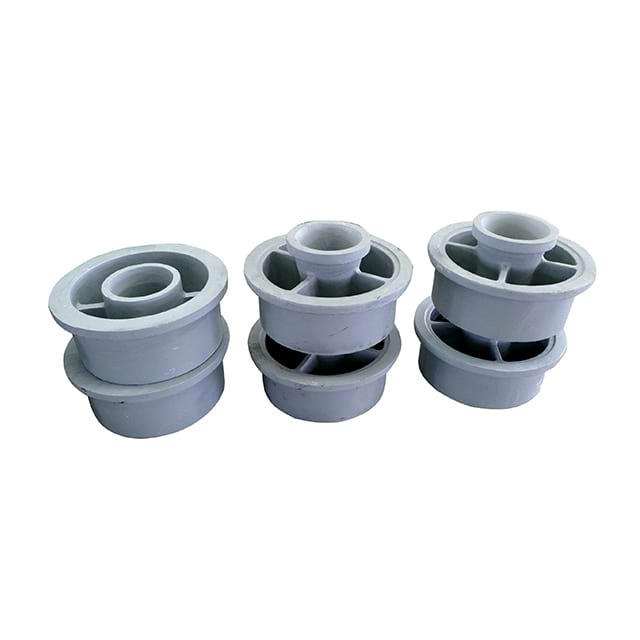
To enforce these standards, buyers must implement a structured Quality Control Plan. A "one-size-fits-all" approach leads to waste or risk. We suggest using an inspection matrix to assign appropriate rigor to each part family.
A tiered approach allows for clarity and cost control:
Level 1 (Commodity): Visual Inspection + Dimensional Spot Check (Basic).
Level 2 (Industrial): All Level 1 checks + Brinell Hardness Testing + Chemical Certification (Standard).
Level 3 (Severe Duty): All Level 2 checks + 100% MPI on critical zones + X-Ray sample verification.
This matrix is particularly useful when ordering Custom Gray Iron Castings where requirements may vary significantly between revisions.
Always review the Material Test Report provided with the shipment. Look for specific heat numbers that trace back to the production date. Check that the chemical composition falls within the ASTM range. Ensure physical test results (tensile/hardness) meet your drawing requirements. Generic statements like "Conforms to Standard" without data are unacceptable.
Be wary of suppliers who lack traceability. If they cannot link a specific casting to a specific pour date or batch, their process control is suspect. Another red flag is a refusal to agree on porosity standards. A supplier should be willing to sign off on a spec like "Max 2mm pore size on non-machined surfaces." Total refusal suggests they lack confidence in their molding process.
Effective quality inspection of gray iron casting products is a multi-layered process. It begins with raw material control and ends with rigorous physical testing. The lowest price on a quote often reflects a lack of these critical process controls. For applications requiring high precision, abrasion resistance, or vibration damping, the microstructure verified via inspection is just as important as the physical dimensions.
Ultimately, your goal is to build a partnership where quality is assured by the process, not just sorted out at the end. We encourage you to audit the supplier’s process, not just their parts. By implementing a tiered inspection matrix and understanding the specific behaviors of gray iron, you ensure reliability and lower your long-term costs.
A: There is no single global standard dedicated solely to gray iron visual appearance. Most high-quality contracts reference MSS SP-55 (originally for steel) or create "limit samples" (photos of acceptable vs. unacceptable defects) agreed upon by both buyer and foundry.
A: Yes, but with difficulty. The graphite flakes in gray iron scatter high-frequency sound waves. Inspectors must use lower frequencies and specialized calibration blocks. For general internal soundness, X-ray (RT) is often more definitive but more expensive.
A: Porosity (gas holes) and Shrinkage are the most common. Gas holes (often smooth/round) come from poor venting or mold moisture, while shrinkage (jagged/rough) occurs due to improper feeding or cooling design.
A: Moving from standard visual inspection to Level 3 (NDT + X-ray) can increase part cost by 20-50%. It is vital to only specify advanced NDT for critical stress areas on the drawing, rather than requiring "100% NDT" on the entire part.


