Views: 0 Author: Site Editor Publish Time: 2026-01-20 Origin: Site


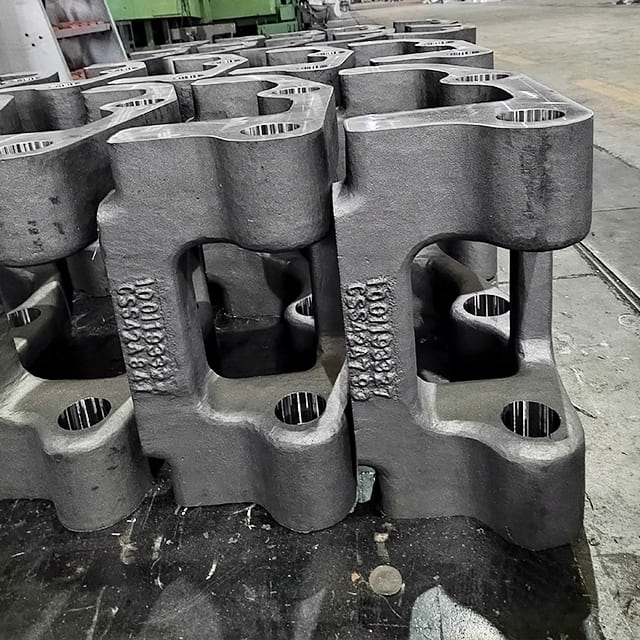
In heavy machinery manufacturing, selecting the right material is critical. Components need to withstand extreme conditions, from immense stress to constant wear. Carbon steel casting has become the go-to material, offering a perfect balance of strength, cost-effectiveness, and versatility. This material is essential for creating durable, high-performance parts that ensure the longevity of machinery. In this article, we will explore why carbon steel casting is so widely used and how it continues to support industries like construction and mining.
Carbon steel casting is widely used in heavy machinery due to its exceptional strength and durability. It offers high tensile strength, capable of withstanding immense static and dynamic loads. For instance, excavator undercarriages and mining crushers rely on carbon steel castings to absorb shocks and resist deformation under heavy stress, ensuring reliable performance in tough conditions.
Carbon steel casting strikes an excellent balance between performance and cost. While the initial investment may be higher, its long-term benefits make it more economical. Carbon steel castings are more affordable than other alloys, like ductile iron, due to easier mass production. Additionally, their durability reduces maintenance and replacement costs.
Carbon steel casting is highly resistant to wear and corrosion, crucial for components exposed to abrasive materials, moisture, and chemicals. The material's high-carbon grades provide excellent wear resistance, extending the lifespan of machinery and reducing downtime and maintenance.
The casting process allows for intricate and complex geometries that would be difficult to achieve with other manufacturing methods. This flexibility is particularly valuable in heavy machinery, where parts often have unique shapes for specific functions. Carbon steel castings can be tailored to meet the needs of any heavy-duty application.
Advantage | Benefit |
Strength & Durability | Withstands static and dynamic loads, ideal for heavy-duty machinery. |
Cost-Effectiveness | Affordable, reduces long-term maintenance and replacement costs. |
Wear & Corrosion Resistance | High resistance to wear and corrosion, increasing machinery lifespan. |
Design Flexibility | Enables complex shapes for specialized components. |
Carbon steel castings are designed to absorb high-impact forces without cracking or breaking. This ability is essential for components like mining crusher jaws and excavator buckets, which face daily intense impacts. Carbon steel's toughness ensures these parts maintain their integrity over time, even in harsh environments.
Carbon steel casting is highly machinable, allowing for precise adjustments or additional features after casting. Its ease of machining makes it ideal for components requiring fine-tuning. Additionally, carbon steel is weldable, enabling efficient assembly of parts. These properties make it suitable for complex machinery that demands precision and durability.
Carbon steel’s properties can be enhanced with heat treatments like annealing, quenching, and tempering. These processes increase strength, toughness, and wear resistance. For example, quenching and tempering provide high tensile strength for load-bearing components while maintaining necessary ductility, making it adaptable for different machinery applications.
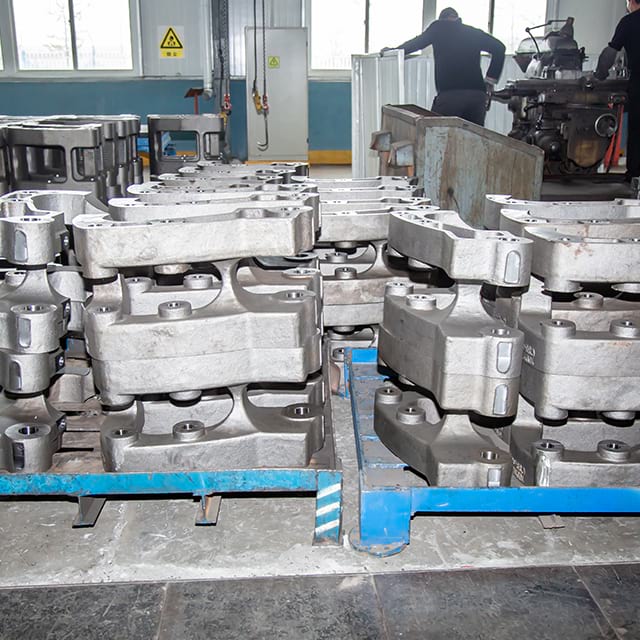
Carbon steel castings are essential in the construction and mining industries, where heavy-duty components are required. Gears, valves, engine components, and load-bearing parts rely on carbon steel for its strength and durability. Mining machinery, such as crushers and excavators, demands parts that can withstand constant abrasion and impact. Carbon steel castings ensure these machines perform reliably under extreme conditions.
Carbon steel castings are also crucial in agricultural and railway machinery, where components face constant stress. Whether it’s a tractor plowing fields or a locomotive pulling heavy loads, carbon steel castings provide the necessary strength, wear resistance, and impact absorption to keep parts like axles, gears, and linkages functioning effectively, reducing downtime and repair costs.
Carbon steel castings play a significant role in building and infrastructure projects. They are commonly used in structural nodes, bridge bearings, and pipe fittings. In steel-framed buildings and bridges, carbon steel castings help distribute loads, ensuring stability and safety. Additionally, in industrial plants, carbon steel fittings provide secure, leak-proof connections for high-pressure pipes, contributing to the overall safety of the infrastructure.
Application Area | Key Components | Benefits | Example Uses |
Construction & Mining | Gears, valves, engine components, load-bearing parts | Strength, durability, impact resistance | Excavators, mining crushers, heavy machinery |
Agriculture & Railway | Axles, gears, linkage components | Wear resistance, impact absorption | Tractors, locomotives, agricultural machinery |
Building & Infrastructure | Structural nodes, bridge bearings, pipe fittings | Load distribution, leak-proof connections | Steel-framed buildings, bridges, industrial plants |
While both carbon steel and ductile iron offer good strength and casting capabilities, carbon steel remains the superior choice for heavy-duty machinery. Carbon steel castings provide better impact resistance, making them ideal for components exposed to high-impact forces. Ductile iron, while offering some flexibility and toughness, is typically not as resistant to wear and abrasion as carbon steel. Carbon steel's excellent strength-to-cost ratio makes it more economical for large-scale production of complex components that demand superior performance.
Compared to fabricated steel, carbon steel castings offer more design flexibility and higher load-bearing capacity. Welded fabricated steel parts are typically limited to simpler shapes due to the constraints of welding processes. In contrast, carbon steel castings can be molded into intricate, complex geometries, providing manufacturers with more design freedom. Additionally, carbon steel castings are more cost-effective for complex parts, as the casting process reduces labor and material waste.
Material Comparison | Carbon Steel Castings | Ductile Iron Castings | Fabricated Steel (Welded) |
Impact Resistance | Excellent | Good (with proper grade) | Depends on grade and welding quality |
Wear Resistance | Superior | Moderate | Lower compared to castings |
Design Flexibility | High - Complex geometries | High - But slightly limited | Limited - Simple shapes |
Cost-Effectiveness for Complex Parts | High - Reduced labor and material waste | Moderate | Lower - High labor and material waste |
Load-Bearing Capacity | High | Good | Good (depends on welding quality) |
Carbon steel castings are produced using different techniques, each suited to specific parts. Sand casting is commonly used for large structural components, while investment casting is ideal for precise, detailed parts. Shell molding offers a balance of both, combining accuracy and efficiency for medium to large parts. These methods help create durable components with complex shapes needed for heavy machinery.
Casting Method | Best For | Advantages | Component Size |
Sand Casting | Large, structural parts | Cost-effective, flexible for complex shapes | Large |
Investment Casting | Highly detailed components with tight tolerances | High precision, ideal for intricate designs | Small to Medium |
Shell Molding | Medium to large parts | Combines precision and efficiency | Medium to Large |
After the casting process, parts often undergo secondary machining to meet precise tolerances. CNC milling, drilling, and grinding are used to achieve the required specifications, ensuring that the final product fits perfectly in its intended application. Surface finishing techniques such as sandblasting or shot peening can improve corrosion resistance and enhance the appearance of the part, making it suitable for long-term use in harsh environments.
Carbon steel castings provide the structural integrity needed to ensure machinery safety. Components made from carbon steel meet industry safety standards and are designed to withstand heavy loads without failure. This reliability is critical in industries like construction, mining, and agriculture, where machinery safety directly impacts operational success.
Carbon steel castings are built to last. Their resistance to wear, corrosion, and fatigue ensures that they can perform over long periods without requiring frequent maintenance. This durability reduces downtime and repair costs, making them an economical choice for industries that rely on machinery for continuous operation.
Carbon steel castings are manufactured to meet stringent industry standards and regulations, ensuring that machinery remains safe and compliant. The consistency of material properties and performance guarantees that the parts will function as expected in critical applications, reducing the risk of failure and improving operational efficiency.
Benefit | Description |
Structural Integrity | Ensures machinery safety, withstanding heavy loads without failure |
Longevity & Reduced Maintenance | Resistant to wear and corrosion, reducing downtime and costs |
Regulatory Compliance | Meets industry standards for safety and operational efficiency |
Carbon steel casting is widely favored in heavy machinery manufacturing due to its strength, durability, and cost-effectiveness. It withstands extreme conditions, resists wear and corrosion, and offers design flexibility. These qualities make it invaluable in construction, mining, and agriculture. Jinhong Shukong Machinery Casting Co., Ltd. provides high-quality carbon steel castings that enhance machinery performance, ensuring reliability and longevity. Their products are designed to meet the toughest industrial demands, delivering lasting value to manufacturers.
A: Carbon steel casting is a manufacturing process where molten carbon steel is poured into molds to create durable components. It is widely used in heavy machinery for its strength and ability to withstand extreme conditions.
A: Carbon steel casting is valued for its combination of strength, durability, cost-effectiveness, and resistance to wear and corrosion, making it ideal for machinery that operates under harsh conditions.
A: Carbon steel casting enhances machinery by providing strong, long-lasting parts that resist wear and impact, ensuring reliable performance in demanding industries like construction and mining.
A: Compared to other materials, carbon steel casting offers superior strength, impact resistance, and design flexibility, making it more economical for large-scale production of complex machinery parts.
A: Yes, carbon steel casting is cost-effective due to its strength-to-cost ratio. It provides durable, high-performance parts that reduce long-term maintenance and replacement costs for heavy machinery.
A: Yes, carbon steel casting allows for intricate and complex geometries, making it ideal for producing specialized components in heavy machinery that require precise shapes and strength.